
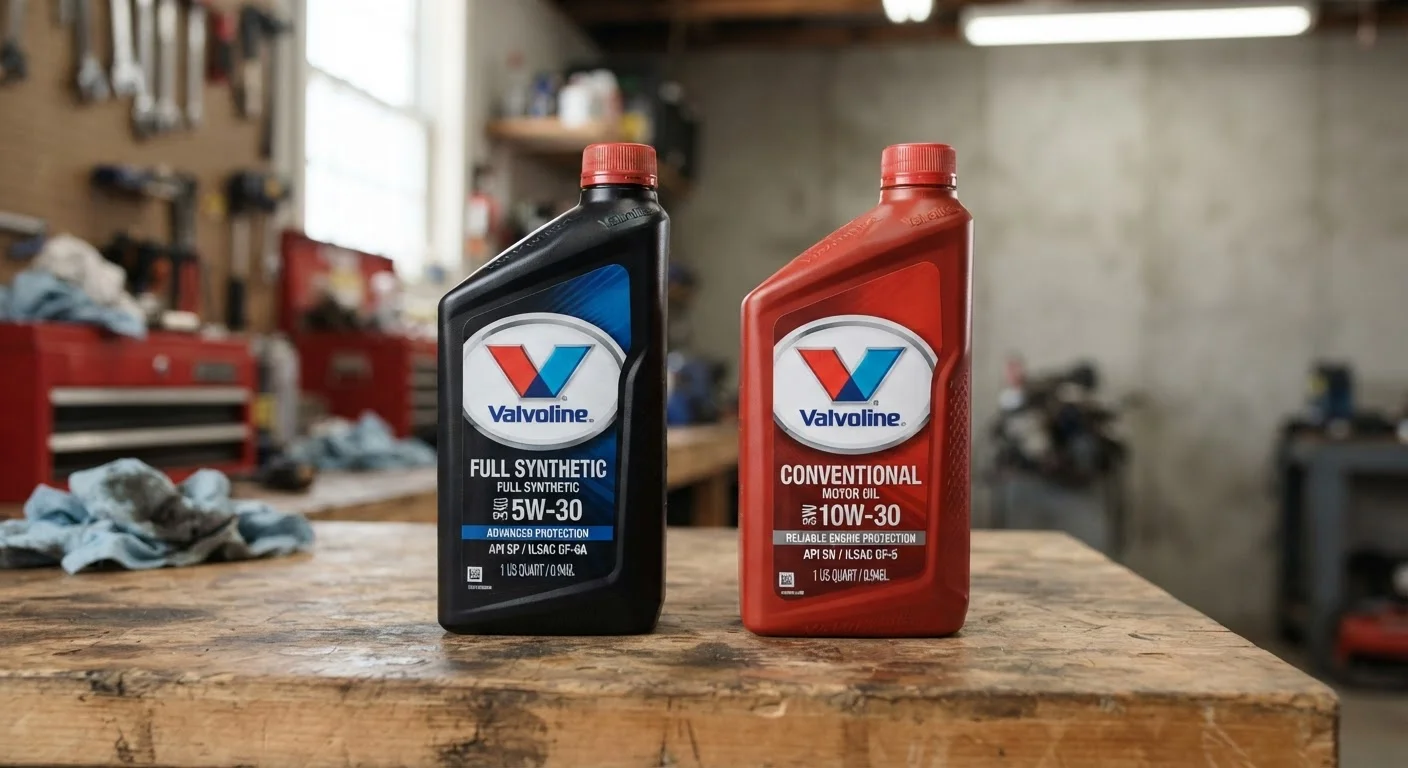
What Makes These Two Oils Different
Motor oil has one fundamental job: lubricate the moving parts inside your engine to reduce friction and heat. Both synthetic and conventional oil do this, but they're made differently - and that difference matters for your engine's long-term health.
Conventional motor oil is refined from crude oil pumped out of the ground. The refining process removes many impurities, but the resulting molecules are irregular in size and shape. That inconsistency affects how the oil behaves under stress.
Synthetic motor oil is chemically engineered, typically starting from a base oil that's been further processed or built up from smaller molecules. The result is a more uniform molecular structure that performs more predictably under high heat and cold starts.
Think of it like this: conventional oil is a natural product that's been cleaned up, while synthetic is purpose-built for the job. Neither is universally better - the right choice depends on your specific vehicle and how you drive. For a broader look at what your car needs to stay healthy, see our guide on car fluids every driver should know about.
How They Compare Side by Side
Here's a straightforward look at how synthetic and conventional oil stack up across the factors that matter most to everyday drivers.
| Criterion | Synthetic Motor Oil | Conventional Motor Oil |
|---|---|---|
| How it's made | Chemically engineered base oil | Refined from crude oil |
| Typical change interval | 7,500-10,000+ miles (varies by vehicle) | 3,000-5,000 miles typically |
| Cost per quart | Higher upfront cost | Lower upfront cost |
| Cold weather performance | Flows better at low temperatures | Thickens more in cold starts |
| High heat stability | More resistant to breakdown | Breaks down faster under high heat |
| Engine compatibility | Required by many newer engines | Sufficient for many older engines |
| Environmental impact | Fewer changes may mean less waste oil | More frequent disposal of used oil |
One thing worth noting: the longer change interval for synthetic oil isn't automatic. Your driving habits - lots of short trips, stop-and-go traffic, towing, or extreme temperatures - affect how quickly any oil degrades. Always check your owner's manual for the manufacturer's recommended interval, not just the general guidance on the oil container.
Common Questions Drivers Ask
Can I switch from conventional to synthetic?
For most modern vehicles, yes. The idea that switching will cause leaks or damage in an older engine is largely a myth rooted in older formulations. Today's synthetics are compatible with most engines. That said, if your engine is already burning or leaking oil, switching oils won't fix that underlying problem.
Does synthetic oil make a noticeable difference?
In everyday driving, most people won't feel a dramatic difference. The benefits of synthetic - better protection at startup, more stability at high temperatures, slower breakdown - tend to show up over tens of thousands of miles, not after a single oil change. It's long-term engine health, not an immediate performance upgrade. This is a good example of a situation where price and value aren't the same thing.
Is the 3,000-mile oil change rule still valid?
For most modern vehicles, no. Many manufacturers now recommend 5,000 to 10,000 miles or more between changes, especially with synthetic oil. Sticking to the old 3,000-mile rule wastes money and oil. Our article on car maintenance myths costing drivers money covers this and other outdated rules in detail.
Should I use synthetic if my manual says conventional is fine?
You can, but you don't have to. Synthetic won't harm a compatible engine, but spending more isn't necessary if your vehicle was designed around conventional oil specifications and you maintain it properly.
Making the Right Call for Your Vehicle
The single most reliable source of guidance here is your vehicle's owner's manual. It specifies the oil viscosity grade your engine requires (such as 5W-30 or 0W-20) and whether synthetic is recommended or required. Some newer engines - particularly turbocharged ones - are engineered specifically for full synthetic and may be damaged over time if run on conventional.
If you're uncertain about your next oil change, our comparison of DIY oil change vs. taking it to a shop can help you decide how to handle the service, not just what oil to use.
The bottom line: neither oil type is universally superior. What matters is using the right oil for your specific engine, at the right intervals, and not letting changes slide too long regardless of which type you choose. Consistent maintenance beats premium products used inconsistently every time.