Why This Decision Is More Complex Than It Looks
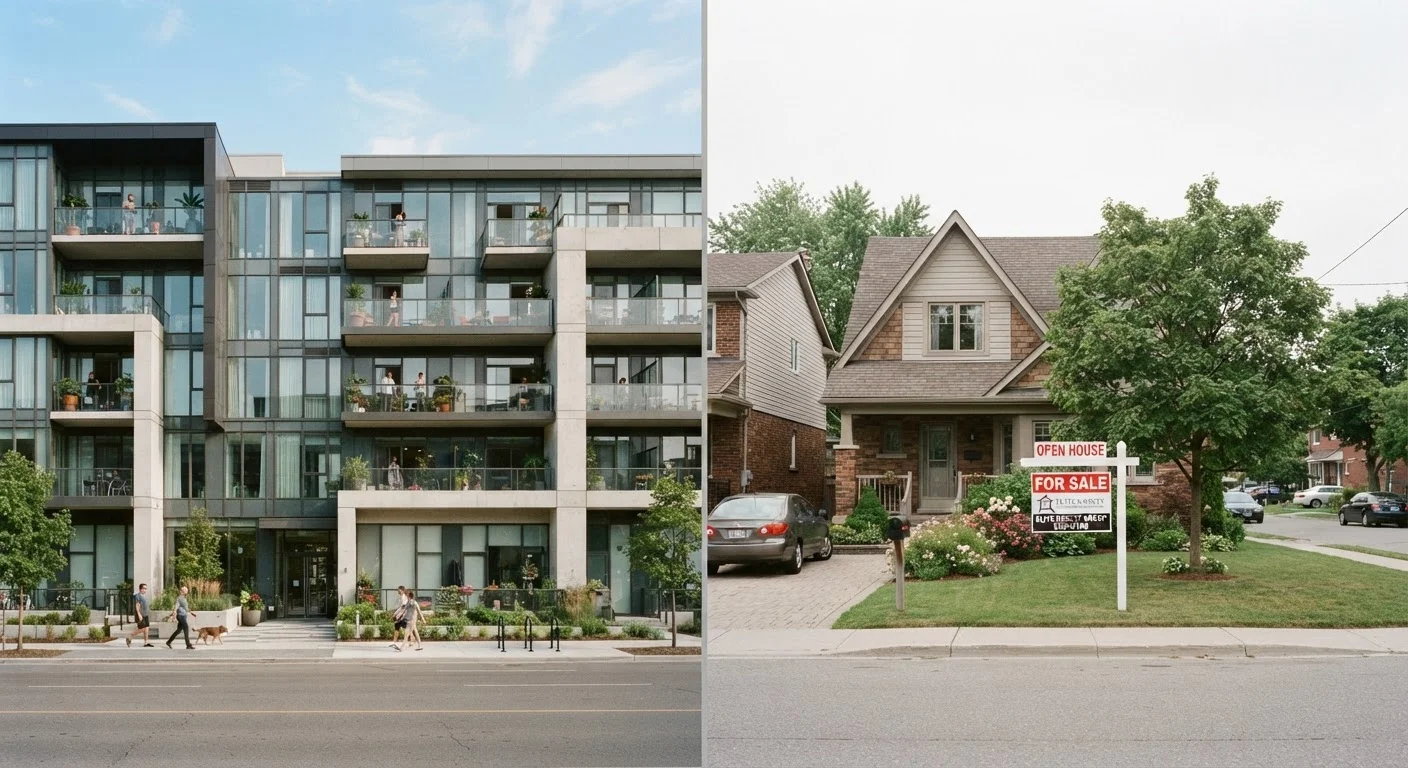
The rent-vs.-buy question gets framed as a financial no-brainer in both directions depending on who's talking. Homeownership advocates point to equity and wealth-building; renting advocates point to flexibility and lower short-term exposure. Both are partly right, which is why the honest answer is: it depends.
What it depends on includes your savings, income stability, planned length of stay, local market conditions, and personal priorities. For a deeper framework on weighing these variables, see our framework for the rent-vs.-buy decision.
The goal here is to give you a clear-eyed comparison of both paths - not to steer you toward one.
The Real Costs on Both Sides
Monthly rent is visible and predictable. The costs of homeownership are less obvious. A mortgage payment is only the starting point - buyers also absorb property taxes, homeowner's insurance, HOA fees where applicable, and ongoing maintenance. Industry estimates typically place annual maintenance costs at roughly 1-2% of a home's value, though this varies considerably by property age and condition.
Buying also involves substantial upfront costs: a down payment, closing costs (commonly 2-5% of the purchase price), and moving expenses. These create a financial threshold that takes years to recover through equity or appreciation.
Renting carries its own less-visible costs. Beyond monthly rent, renters typically pay security deposits, application fees, renters insurance, and potentially utilities depending on lease terms. However, renters are not responsible for structural repairs or property tax increases - costs that fall entirely on owners.
| Renting | Buying | |
|---|---|---|
| Upfront costs | Security deposit, first/last month | Down payment, closing costs (2-5%) |
| Monthly cost predictability | Predictable within lease term | Varies; taxes and maintenance add up |
| Equity accumulation | None | Yes, through principal paydown |
| Flexibility to relocate | High - move at lease end | Low - high transaction cost to sell |
| Maintenance responsibility | Landlord handles most repairs | Owner bears all costs |
| Exposure to market changes | Rent can increase at renewal | Property value can rise or fall |
| Wealth-building potential | Limited directly | Significant over long time horizons |
Time Horizon Changes the Math Significantly
Buying a home involves high transaction costs in both directions - purchasing and eventually selling. Real estate commissions, closing costs, and transfer taxes mean that a buyer who sells within two or three years may not break even, even if the home appreciated modestly.
The longer you stay, the more those upfront costs are spread across time, and the more equity you accumulate through principal paydown. Most analyses suggest a minimum five-to-seven-year stay is needed for buying to clearly outperform renting from a purely financial standpoint, though this varies by market.
For renters uncertain about their plans - due to career flexibility, relationship changes, or other factors - locking into a 30-year mortgage represents a significant commitment. First-time renters in particular may benefit from understanding their options fully before committing to purchase.
Market Conditions and the Price-to-Rent Ratio
One useful data point is the price-to-rent ratio - calculated by dividing a home's purchase price by the annual rent for a comparable property. A ratio above 20 generally suggests that buying is more expensive relative to renting in that market; below 15 tends to favor buying. Many coastal and high-demand urban markets have seen ratios well above 20 in recent years.
Local inventory, interest rates, and rent trends all interact with this calculation. In markets where home prices have outpaced wage growth significantly, the financial case for renting is stronger - not because renting builds wealth, but because it avoids overpaying during a pricing peak.
Before drawing conclusions, it's worth reviewing common home-buying myths that can distort how buyers evaluate their readiness and the market.
Financial Readiness and What Lenders Look For
Even if buying makes sense in your market, your financial profile determines whether you can access favorable loan terms. Lenders evaluate credit score, debt-to-income ratio, employment history, and cash reserves. A lower credit score typically means a higher interest rate, which substantially increases the total cost of a loan over its life.
Down payment size affects both monthly payments and whether you'll pay private mortgage insurance (PMI) - an added cost for borrowers who put down less than 20%. PMI protects the lender, not the borrower, and adds to monthly expenses until sufficient equity is reached. For more on mortgage structure, see how fixed and adjustable-rate mortgages compare.
Renting, by contrast, generally requires a security deposit and income verification, with a lower barrier to entry. For households still building financial stability, renting can serve as a productive period to reduce debt, grow savings, and strengthen the financial position needed to buy effectively later.
This article is for general informational purposes only and does not constitute financial, legal, or real estate advice. Readers should consult qualified professionals before making housing decisions.