Why This Decision Is Harder Than It Looks
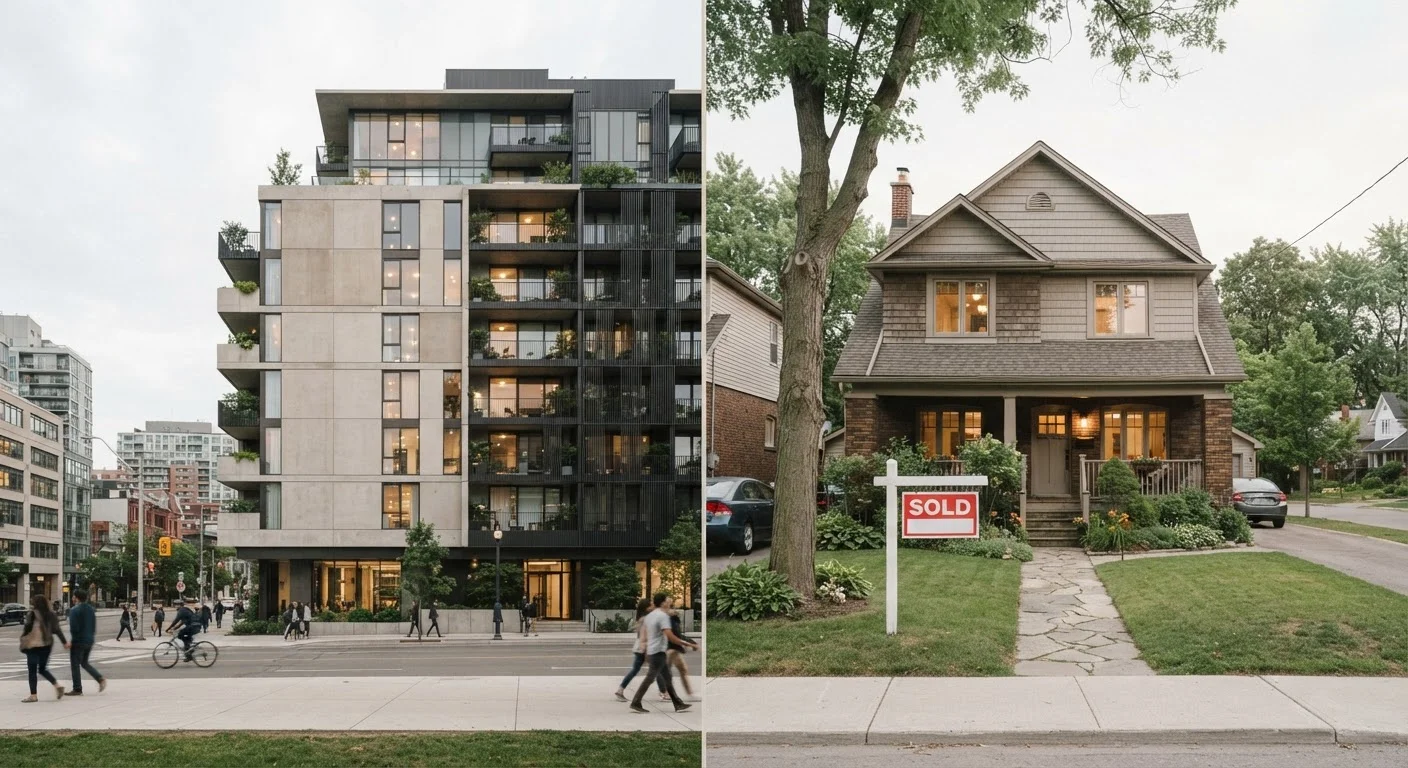
The rent-vs.-buy question is one of the most consequential financial choices an American household will face - yet it's routinely oversimplified. Popular wisdom often frames homeownership as the obvious path to wealth and renting as money thrown away. Neither framing holds up under scrutiny.
The reality is that both options carry real costs and real benefits. What tips the balance is a combination of your personal finances, local market dynamics, and lifestyle priorities. Weighing these factors honestly - rather than defaulting to cultural assumptions - is where sound decision-making begins.
A useful starting point is the price-to-rent ratio: divide the median home purchase price in your target area by the annual rent for a comparable property. A ratio above 20 generally suggests renting is more cost-competitive; below 15 tends to favor buying. This metric won't settle the question on its own, but it anchors the conversation in local data rather than national generalizations.
The Case for Buying
Homeownership offers advantages that extend well beyond the financial, but the financial ones are real and worth naming clearly.
Builds equity with each mortgage payment
Unlike rent, mortgage payments reduce your loan balance and increase your ownership stake - effectively a forced savings mechanism that compounds over time.
Protection from rent increases
A fixed-rate mortgage locks in a stable principal-and-interest payment for the life of the loan, insulating owners from market-driven rent hikes.
Freedom to modify your living space
Owners can renovate, paint, landscape, or alter the property without landlord approval, enabling both personalization and value-adding improvements.
Potential for long-term appreciation
Residential real estate has historically appreciated over long holding periods in many U.S. markets, though appreciation is not guaranteed and varies significantly by location.
Stability for long-term planning
Ownership provides tenure security - no non-renewal notices, no landlord decisions that force a move - which supports school enrollment, community ties, and long-term planning.
The most significant financial benefit is equity accumulation. Each mortgage payment reduces your loan principal and increases your ownership stake - a form of forced savings that renting does not replicate. Over a long holding period, that equity can become a meaningful asset, particularly in markets with steady appreciation.
Ownership also provides stability that renters typically cannot access: fixed-rate mortgage payments don't rise with the market, and no landlord can issue a non-renewal notice. For families who want to put down roots in a school district or community, that predictability has real value. If you're exploring mortgage structures, understanding how fixed and adjustable rates compare is an important early step.
The Case for Renting
Renting is often the financially rational choice - not a fallback - depending on circumstances. Understanding your rights and costs as a renter is essential for making the most of this path.
High upfront costs create a significant barrier
Down payments, closing costs, inspections, and moving expenses can total tens of thousands of dollars before a buyer moves in, making entry difficult for many households.
Selling quickly often means losing money
Real estate transaction costs - agent commissions, transfer taxes, and other fees - typically run 6-10% of the sale price, eroding gains when a home is sold within a few years of purchase.
Maintenance costs fall entirely on the owner
Property upkeep, repairs, and replacements - roof, HVAC, appliances - are the owner's responsibility and can be substantial and unpredictable.
Reduced geographic flexibility
Owning a home makes it significantly harder and more expensive to relocate for a job change, family need, or lifestyle shift compared to ending a lease.
Exposure to market downturns
Home values can decline, and owners who purchase near a market peak or must sell in a downturn may realize a loss rather than a gain on their investment.
The flexibility renting provides has concrete financial value. If your job requires relocation, or if you're uncertain about a neighborhood or city, locking into a 30-year mortgage prematurely can be costly. Selling a home within two to three years of purchase often means losing money once transaction costs - typically 6-10% of the sale price - are factored in.
Renting also frees capital for other uses. The funds that would otherwise go toward a down payment and closing costs can be invested or held as a liquidity buffer. Whether that alternative use actually produces better returns depends on market conditions and individual behavior - it's not automatic, but the option is real.
Renting Is Not 'Throwing Money Away'
The common claim that rent payments are wasted ignores the real services renting provides: housing, maintenance coverage, and flexibility. Homeowners also pay non-equity costs - mortgage interest, property taxes, insurance, and maintenance - that do not build ownership stake. A fair comparison accounts for all costs on both sides, not just the mortgage payment versus monthly rent.
The Numbers That Actually Matter
Before making a decision, it helps to work through a break-even analysis: how many years does it take for buying to become cheaper than renting, after accounting for all costs on both sides?
5-7 years
Typical break-even horizon for buying vs. renting
Real estate analysts commonly cite a five-to-seven-year holding period as the threshold at which buying begins to outperform renting financially, though this varies by market.
6-10%
Typical transaction cost as share of sale price
Selling a home involves agent commissions, transfer taxes, and other closing costs that collectively reduce net proceeds and affect the break-even calculation.
1-2%
Annual home maintenance cost estimate
Financial planners commonly suggest budgeting 1-2% of a home's value per year for maintenance and repairs - a cost renters do not bear directly.
On the buying side, total costs include mortgage interest, property taxes, homeowner's insurance, maintenance (commonly estimated at 1-2% of home value annually), and closing costs at purchase and sale. On the renting side, costs are primarily rent and renter's insurance, though the opportunity cost of not building equity is also a factor.
A break-even timeline of five to seven years is a commonly referenced threshold, but this varies substantially by location and market conditions. Running the numbers for your specific situation - or working with a licensed financial adviser - will produce a more reliable answer than any rule of thumb.
Personal Factors That Often Decide It
Even when the math is close, non-financial factors frequently tip the balance. Consider these honestly:
- Job and income stability: Mortgage qualification and sustained payments require reliable income. Volatile income situations favor the lower fixed commitment of renting.
- Savings and debt: Most lenders expect a down payment of 3-20% plus closing costs of 2-5%. High existing debt loads may affect both qualification and financial comfort after purchase.
- Planned length of stay: The shorter your anticipated stay, the less time you have to recoup transaction costs and benefit from appreciation.
- Life stage and flexibility needs: Growing families, people in new careers, and those in transitional periods often benefit from the optionality renting preserves.
The comparison has parallels in other major financial decisions - the own-vs.-lease trade-off in the auto market involves similar tensions between equity, flexibility, and upfront cost. Structured decision frameworks like evaluating a major purchase before committing can also be adapted to housing decisions.
This article is for general informational purposes only and does not constitute financial, legal, or real estate advice. Readers should consult qualified professionals before making housing or investment decisions.