
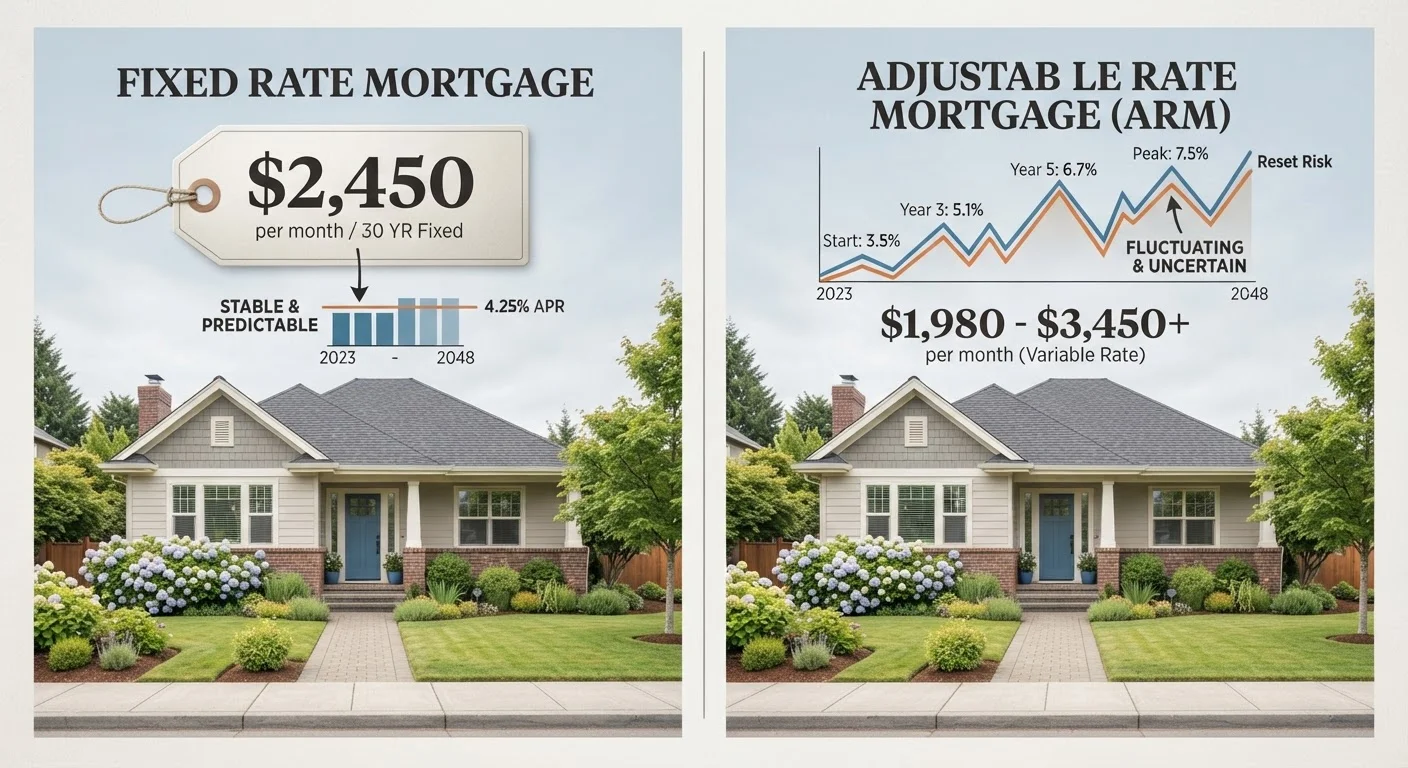
How Each Mortgage Type Works
A fixed-rate mortgage carries the same interest rate from the first payment to the last. Whether the loan term is 15 or 30 years, the principal-and-interest portion of your monthly payment never changes. That predictability makes budgeting straightforward, which is why fixed-rate loans are the most common mortgage type in the United States.
An adjustable-rate mortgage (ARM) works differently. It begins with a fixed introductory period - commonly 5, 7, or 10 years - during which the rate stays put. After that, the rate adjusts at set intervals (often annually) based on a benchmark index, such as the Secured Overnight Financing Rate (SOFR), plus a lender margin. If the index rises, so does your rate and payment; if it falls, your payment may decrease.
ARMs are typically labeled with two numbers, such as a 5/1 ARM: the first number indicates the length of the fixed period in years, and the second indicates how often the rate resets afterward. Most ARMs also include rate caps that limit how much the rate can move at each adjustment and over the life of the loan, providing some protection against extreme swings.
Understanding how fixed and variable expenses behave in your broader budget can help clarify which mortgage structure fits your financial life.
Comparing the Key Trade-Offs
The practical differences between these two structures become clearer when you line them up across the criteria that matter most to homebuyers.
| Fixed-Rate Mortgage | Adjustable-Rate Mortgage | |
|---|---|---|
| Interest rate over time | Stays the same throughout loan term | Changes after initial fixed period |
| Initial rate level | Typically higher than ARM introductory rate | Usually lower during fixed intro period |
| Payment predictability | High - principal and interest never change | Moderate - payments can rise or fall |
| Best time horizon | Long-term ownership (10+ years) | Short- to medium-term ownership (under 7 years) |
| Risk level | Low - no rate change exposure | Higher - rate increases possible after reset |
| Budget planning ease | Very easy - consistent monthly cost | More complex - future payments uncertain |
| Rate cap protections | Not applicable | Periodic and lifetime caps typically included |
One factor the table can't fully capture is timing. When mortgage rates are elevated relative to historical norms, some borrowers choose ARMs anticipating that rates - and their payment - may fall at a future reset. When rates are low, locking in a fixed rate is often the more appealing strategy. Neither assumption is guaranteed, and markets can behave unexpectedly.
The Role of Your Time Horizon
How long you expect to stay in the home is one of the most reliable guides for this decision. If you sell or refinance before the ARM's fixed period ends, you benefit from the lower initial rate without ever experiencing an adjustment. In that scenario, an ARM may represent genuine savings.
If you plan to stay for 15 or 30 years, the calculus shifts. A fixed rate insulates you from whatever happens to interest rates during that long span. An ARM that adjusts upward repeatedly could eventually cost more in cumulative interest than a fixed loan would have - even if the fixed rate started higher.
Calculate Your Break-Even Point
Before choosing an ARM, calculate roughly how long it would take for the fixed-rate loan's higher payment to cost more than the ARM's lower payment plus any future rate increases. If that break-even date is beyond your expected time in the home, the ARM may offer a financial advantage. A mortgage calculator or licensed loan officer can help you run these numbers with realistic rate scenarios.
Before you decide, it's worth doing the foundational rent-vs.-buy analysis that clarifies whether homeownership makes sense at this stage. And if you've already committed to buying, thinking through your local market conditions can sharpen your loan-type decision.
Scenarios Where Each Option Makes Sense
Fixed-rate mortgages tend to fit buyers who:
- Expect to remain in the home beyond the ARM's initial fixed period
- Have a tight monthly budget and cannot absorb payment increases
- Prefer certainty over the possibility of future savings
- Are purchasing in a rate environment where fixed and ARM rates are close together
Adjustable-rate mortgages may suit buyers who:
- Plan to relocate or sell within five to seven years
- Anticipate a significant income increase that would offset any future rate adjustments
- Are purchasing in a high-rate environment and expect rates to fall
- Need lower initial payments to qualify or manage near-term cash flow
Comparing how lenders structure these loans is similar in spirit to weighing financing versus paying cash for a vehicle: the right answer depends on your specific financial position, not a universal rule.
This article is for general informational and educational purposes only and does not constitute personalized financial, mortgage, or legal advice. Consult a licensed mortgage professional or financial adviser before making decisions about your home loan.