What Sets These Three Materials Apart
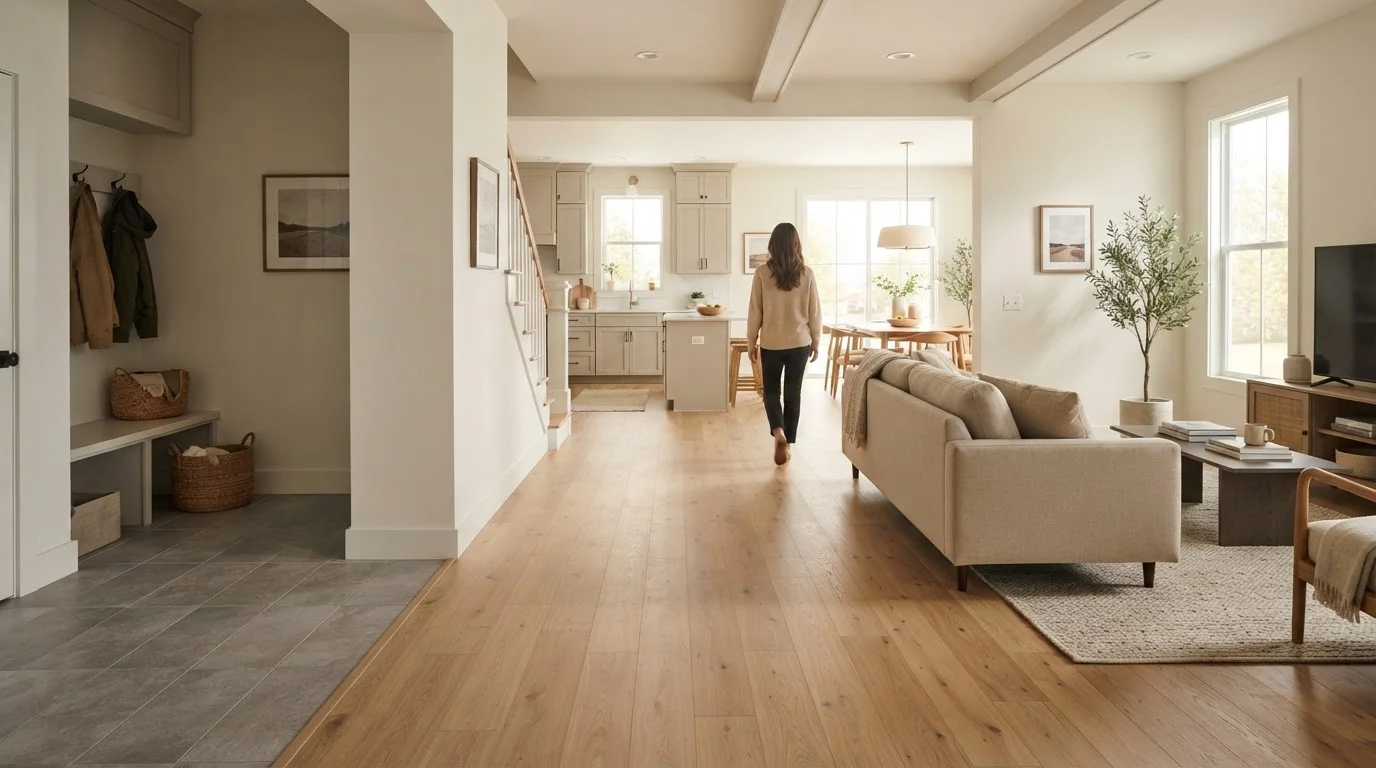
Tile, luxury vinyl plank (LVP), and hardwood are among the most widely used residential flooring materials in the U.S. - and they differ substantially in composition, performance, and care requirements. Understanding those differences upfront prevents costly mismatches between material and room conditions.
Tile is typically made from ceramic or porcelain, fired at high temperatures to produce a hard, dense surface. Luxury vinyl plank is a layered synthetic product - usually featuring a rigid or flexible core, a photographic wear layer, and a protective top coat - engineered to mimic wood or stone. Hardwood is milled from solid lumber or, in engineered form, built with a real-wood veneer over layered plywood. Each material responds to moisture, temperature changes, and subfloor imperfections in fundamentally different ways.
| Tile | Luxury Vinyl Plank | Hardwood | |
|---|---|---|---|
| Moisture Resistance | Excellent (fully waterproof surface) | Very good (waterproof planks) | Poor to fair (avoid wet areas) |
| Scratch & Dent Resistance | Excellent; can crack under impact | Very good with thick wear layer | Moderate; can be refinished |
| DIY Installation Ease | Difficult; often needs professional | Easy; click-lock floating floor | Moderate to difficult |
| Subfloor Flexibility | Requires rigid, level base | Tolerates minor imperfections | Requires stable wood or concrete prep |
| Refinishing Potential | None; replace if damaged | None; replace planks | Yes; multiple times over lifespan |
| Typical Lifespan | 20-50+ years | 15-25 years | 25-100+ years (with refinishing) |
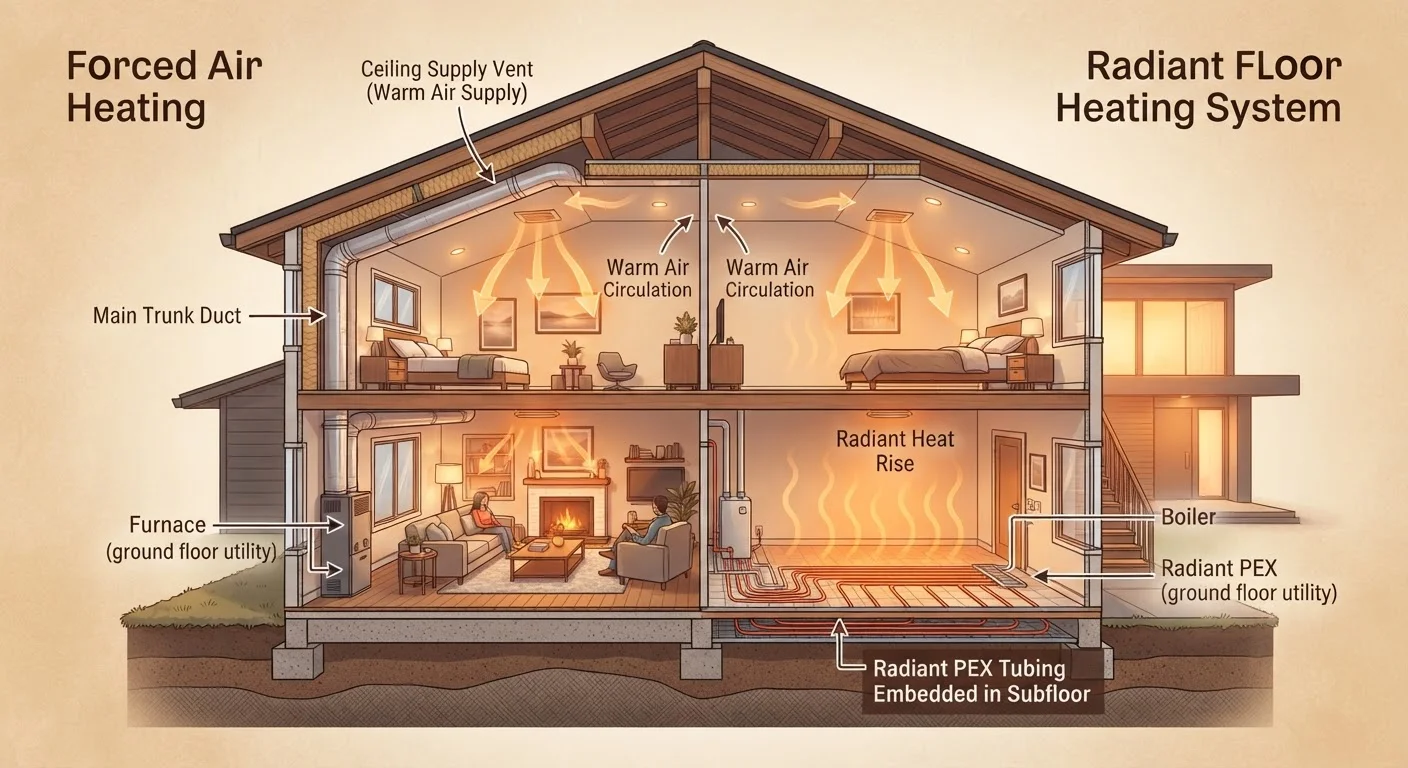
| Comfort Underfoot | Hard; cold without radiant heat | Softer feel; slight give | Warm, natural feel |
| Humidity Sensitivity | None | Minimal | High; needs humidity control |
Moisture Resistance and Room Suitability
Moisture is the single most important environmental factor to consider before selecting flooring. Tile is the clear leader here - fully glazed ceramic and porcelain tiles are essentially impervious to water, making them the standard choice for bathrooms, mudrooms, and kitchens. Grout lines do require sealing and periodic maintenance to prevent staining and mold growth.
Most LVP products are 100% waterproof at the plank level, though standing water can still seep under the floor at seams and edges if the perimeter is not properly sealed. LVP is well suited to basements and laundry rooms where tile might feel too cold underfoot. Hardwood - solid or engineered - is vulnerable to moisture. Solid hardwood should not be installed below grade (in basements) and performs poorly in rooms with frequent humidity swings. Engineered hardwood handles moderate moisture better than solid, but neither should be considered for wet rooms.
Durability, Foot Traffic, and Pets
Porcelain tile is extremely hard and scratch-resistant, able to handle heavy foot traffic and pet claws without visible wear. Its main vulnerability is cracking under impact - a dropped cast-iron skillet can chip or crack even high-quality tile. Grout also requires ongoing attention in busy households.
LVP with a thick wear layer (12 mil or higher is generally considered residential-grade) resists scratches and dents well and holds up to pets and active families. Planks that are damaged can typically be replaced individually without refinishing the entire floor. Hardwood, by contrast, can be scratched by pet nails and dented by heavy furniture - but it carries an advantage no other material can match: it can be sanded and refinished multiple times, effectively resetting the surface. A well-maintained solid hardwood floor can last generations.
Installation Considerations and Subfloor Requirements
All three materials demand a flat, stable subfloor - but each has specific tolerances. Tile installation requires the subfloor to be rigid and level; any flex can crack the tile or grout over time. A cement board or uncoupling membrane underlayment is standard practice for tile in wet areas. Tile installation is typically labor-intensive and best left to professionals for anything beyond a simple backsplash.
LVP is one of the more DIY-friendly flooring options. Many products use a floating click-lock system that doesn't require adhesive or nails. Minor subfloor imperfections can be tolerated within manufacturer-specified limits - always check the flatness tolerance in the product documentation before purchasing.
Hardwood installation varies by type. Solid hardwood is typically nailed or stapled to a wood subfloor and cannot be installed on concrete without a vapor-barrier system. Engineered hardwood can be glued, stapled, or floated, giving it more installation flexibility. Acclimating hardwood to your home's humidity conditions before installation is essential to prevent gaps or buckling after the floor is laid.
Maintenance and Long-Term Costs
Tile is straightforward to clean - regular sweeping and mopping keeps it in good shape. The long-term commitment is grout maintenance: sealing grout annually in wet areas and re-grouting where needed. Tile itself rarely needs replacement unless cracked.
LVP requires simple sweeping and damp mopping. It cannot be refinished, so deep scratches or worn planks must be replaced. Because it's synthetic, most LVP won't off-gas harmful compounds once installed and aired out, though checking product certifications for indoor air quality standards is worthwhile. Hardwood demands more attention to humidity control - indoor relative humidity between roughly 35% and 55% is typically recommended to minimize expansion and contraction. Refinishing costs vary by region and floor area but represent a meaningful expense to budget for every decade or so. That said, refinishing rather than replacing is a significant long-term cost advantage over materials that must be torn out and reinstalled.