Why Shutoff Valve Locations Matter
A burst pipe, a failing supply line, or a running toilet that won't stop - in any of these situations, the first thing you need to do is cut off the water. If you don't know where your shutoff valves are before an emergency, precious minutes are wasted while water spreads across floors, soaks into subfloors, and damages drywall.
Locating, testing, and labeling every shutoff valve in your home is one of the most practical maintenance tasks a homeowner can complete. It takes an afternoon, costs nothing, and can spare you thousands of dollars in water damage remediation. This reference guide covers every valve type and location you should know.
The Main Water Shutoff: Your First Priority
The main shutoff valve controls all water entering your home from the municipal supply or a private well. Shutting this valve off stops water flow to every fixture, appliance, and pipe in the building. It's the valve you use when a problem cannot be isolated to a single fixture or when a pipe has burst inside a wall.
Where to Find It
- Near the water meter: In most homes, the main shutoff is on the same pipe that connects to the water meter, typically located in a basement, crawl space, garage, or utility room. In warmer climates, the meter and valve may be outside in a ground-level box near the curb.
- Along the front foundation wall: In homes with basements, look for the valve on the interior side of the wall facing the street - that's the direction the supply line enters.
- Inside a utility closet: In condominiums or townhomes, the main valve is often inside a utility closet or behind a small access panel.
Valve Types to Recognize
Main shutoffs are usually one of two types: a gate valve (round wheel handle, requires multiple turns to close) or a ball valve (lever handle, closes with a quarter-turn). Ball valves are faster and more reliable in an emergency.
Test Your Main Valve Before You Need It
Many homeowners discover their main shutoff valve is stuck or corroded only when they urgently need to use it. Make it a habit to slowly test the main valve once a year - turn it off, verify water stops at a faucet, then reopen it fully. If it resists, leaks from the stem, or won't turn at all, call a licensed plumber to replace it before an emergency forces the issue.
Fixture and Appliance Shutoff Valves
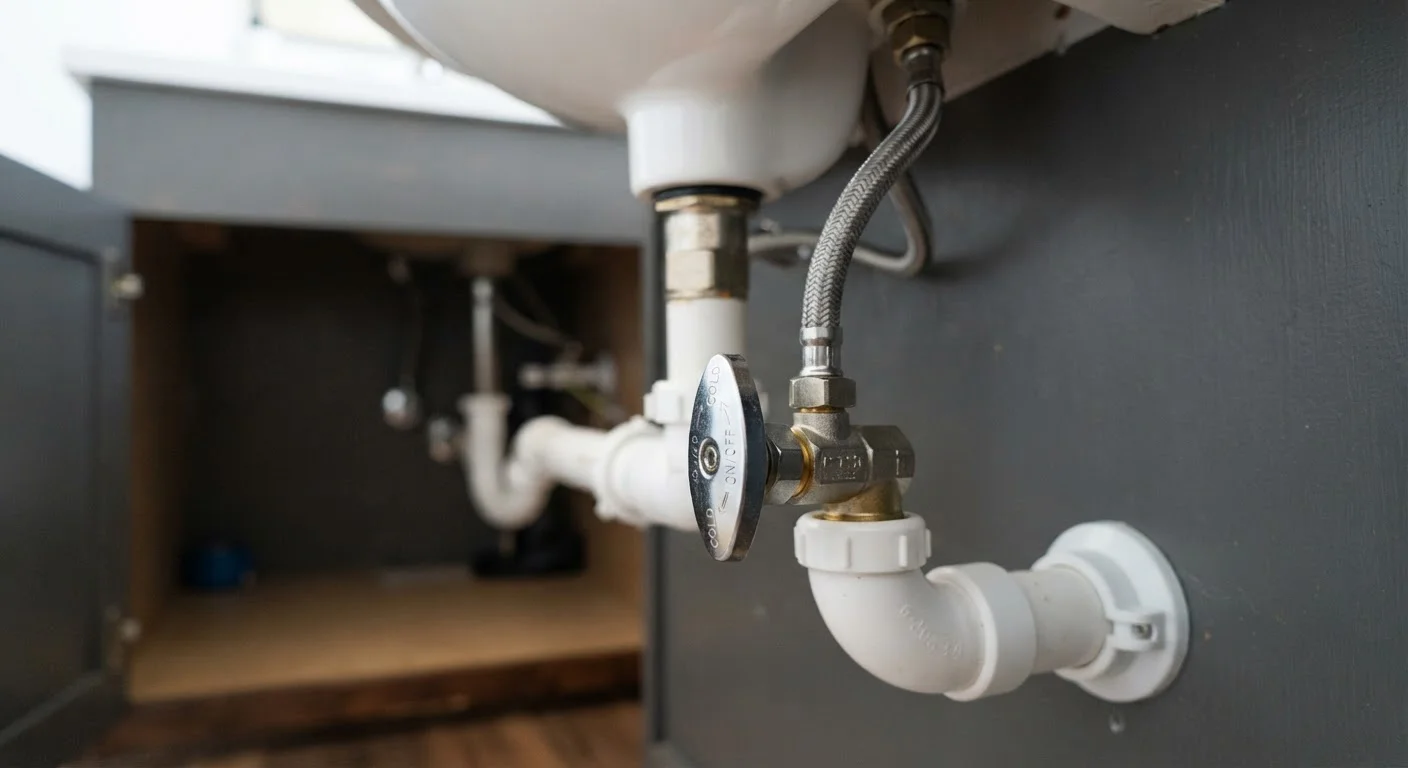
Individual shutoff valves - sometimes called stop valves or angle stops - allow you to cut water to a single fixture without affecting the rest of the house. Knowing these locations means a dripping faucet or leaking toilet supply line doesn't require shutting off water to your entire home.
Main shutoff valve
The single valve that controls all water entering a home from the supply line. Closing it stops water flow to every fixture and appliance in the building.
Stop valve (angle stop)
A small valve installed on the supply line serving a single fixture, such as a toilet or sink. It allows you to cut water to that fixture without affecting the rest of the home.
Ball valve
A shutoff valve controlled by a lever handle that closes with a quarter-turn. Ball valves are considered more reliable and faster to operate than gate valves in emergencies.
Gate valve
A shutoff valve with a round wheel handle that must be turned multiple times to fully open or close. Older homes commonly have gate valves as the main shutoff.
Supply line
The flexible or rigid tube that carries water from a shutoff valve to a fixture such as a toilet tank, faucet, or appliance.
Toilets
Look for the oval or football-shaped valve on the wall or floor directly behind the toilet, on the cold-water supply line running into the tank. Turn clockwise to close.
Sinks (Kitchen and Bathroom)
Open the cabinet doors beneath the sink. You'll typically find two valves - one for hot water (connected to the left-side supply tube) and one for cold. Both are usually small oval-handle stop valves.
Washing Machine
Behind or beside the washing machine, look for two valves (hot and cold) at the wall connection point. Some are hidden behind an access panel. If the valves are old and stiff, avoid forcing them - contact a licensed plumber to replace them before they fail.
Water Heater
The cold-water supply line feeding the water heater has its own shutoff valve, typically located directly above the unit. This lets you isolate and service the heater without cutting household water.
Refrigerator Ice Maker
A small saddle valve or inline valve is usually found where the supply line connects to the cold-water pipe under the sink or behind the refrigerator itself.
Outdoor Hose Bibs
Many homes have interior shutoff valves for outdoor spigots, located in the basement or crawl space on the pipe leading to each exterior faucet. Closing these before winter helps prevent frozen pipes.
Label, Test, and Document Your Valves
Once you've identified every valve, take these three steps to make the information useful in an actual emergency:
- Label each valve. Use waterproof adhesive labels or a paint marker to note what the valve controls (e.g., "Master Bath Toilet" or "Kitchen Cold").
- Test each valve. Gently turn each stop valve clockwise until snug, then reopen. Valves that haven't moved in years can seize or leak when finally turned. If a valve is stuck, corroded, or drips at the stem after you test it, have a licensed plumber replace it - a failed valve offers no protection.
- Create a home plumbing map. Sketch a simple floor plan noting each valve's location. Keep a copy near your main panel and share it with anyone who lives in or regularly cares for your home.
Working on valves connected to gas lines or requiring access to sealed walls is work that should always be handled by a licensed professional. For permit requirements related to plumbing modifications, check with your local building authority, as rules vary by municipality.