
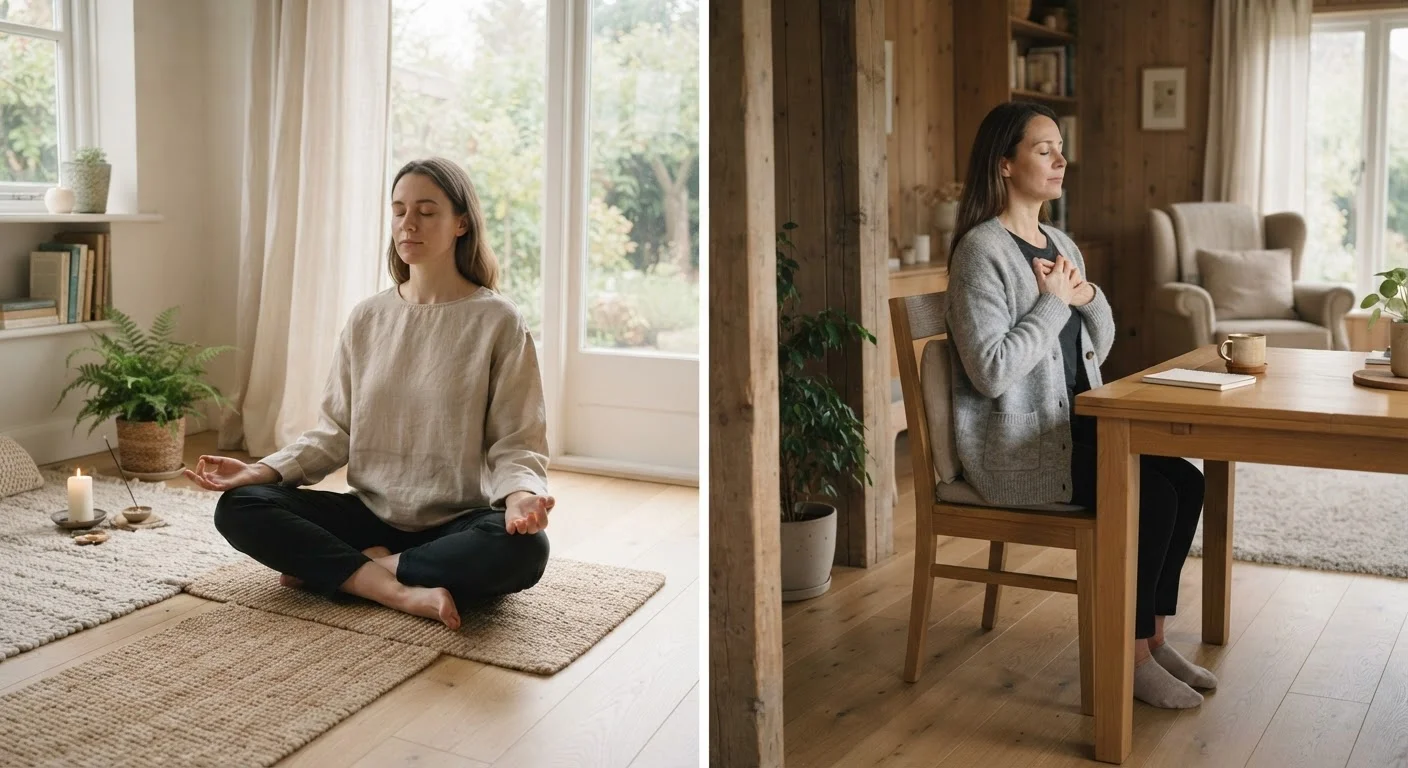
How Each Practice Works
Meditation and deep breathing both reduce stress, but they operate through different mechanisms and timescales. Understanding these differences helps you choose wisely - or combine them effectively.
Meditation is a broad category of mental training practices. The most widely researched form - mindfulness meditation - involves directing sustained, non-judgmental attention to present-moment experience, such as the breath, bodily sensations, or sounds. Over weeks of regular practice, this trains the brain's attentional networks and reduces activity in the default mode network, the system associated with mind-wandering and rumination. Research published in peer-reviewed journals, including work drawing on neuroimaging data, suggests consistent meditation can lead to measurable changes in gray matter density in regions tied to self-awareness and stress regulation.
Deep breathing works more directly on the body's autonomic nervous system. Slow, controlled exhalations - whether through diaphragmatic breathing, box breathing (equal counts of inhale, hold, exhale, hold), or the physiological sigh (double inhale followed by a long exhale) - activate the parasympathetic nervous system. This counteracts the fight-or-flight response by lowering heart rate and cortisol levels. The effect can be felt within minutes, which is why deep breathing is often recommended by clinicians for acute anxiety management. For more on how chronic stress affects the body's systems over time, see The Science Behind Why Chronic Stress Wears the Body Down.
| Criterion | Meditation | Deep Breathing |
|---|---|---|
| Primary mechanism | Attention and emotion regulation training | Autonomic nervous system activation |
| Speed of effect | Gradual (weeks to months) | Rapid (minutes) |
| Learning curve | Moderate; benefits from guidance | Low; self-teachable quickly |
| Session length | Typically 5-20 minutes | Typically 2-10 minutes |
| Setting required | Quiet space preferred | Anywhere, any time |
| Best use case | Long-term resilience and focus | Acute stress and anxiety relief |
| Evidence base | Extensive peer-reviewed research | Strong clinical support |
Practical Considerations: Time, Setting, and Learning Curve
One of the most common barriers to adopting either practice is perceived complexity. Here's how they compare on practical terms.
Deep breathing can be done anywhere - at a desk, in a car before an appointment, or in a restroom during a difficult workday. Most structured techniques take two to ten minutes, require no equipment, and can be self-taught from widely available guidance. The feedback is immediate: most people notice a physical shift in tension within a few breath cycles.
Meditation asks more of the learner initially. Beginners frequently report frustration with mind-wandering, which is actually a normal and expected part of the process - noticing distraction and gently returning attention is the practice itself. Many people benefit from guided sessions (through apps, classes, or audio resources) in the early weeks. Sessions commonly range from five to twenty minutes. Benefits tend to accumulate gradually, which means consistency over weeks matters more than session length.
Both practices integrate well into a structured evening routine. Building a Personal Wind-Down Routine That Actually Sticks explores how to pair calming strategies with your actual schedule to make them sustainable. It's also worth noting that some stress-relief habits can inadvertently backfire - Ways People Unintentionally Make Stress Worse covers what the research says to watch out for.
These Practices Work Well Together
Meditation and deep breathing are not mutually exclusive. Many mindfulness instructors recommend beginning a meditation session with several slow, intentional breaths to help settle the nervous system before shifting attention inward. Using deep breathing as an immediate tool during stressful moments, while building a meditation habit for longer-term benefit, is a practical approach supported by both research and clinical practice.
This article is for general informational and educational purposes only and is not a substitute for professional medical or mental health advice. If you are experiencing persistent anxiety, depression, or other mental health concerns, please consult a qualified healthcare provider.