
Why Mental Health Language Matters
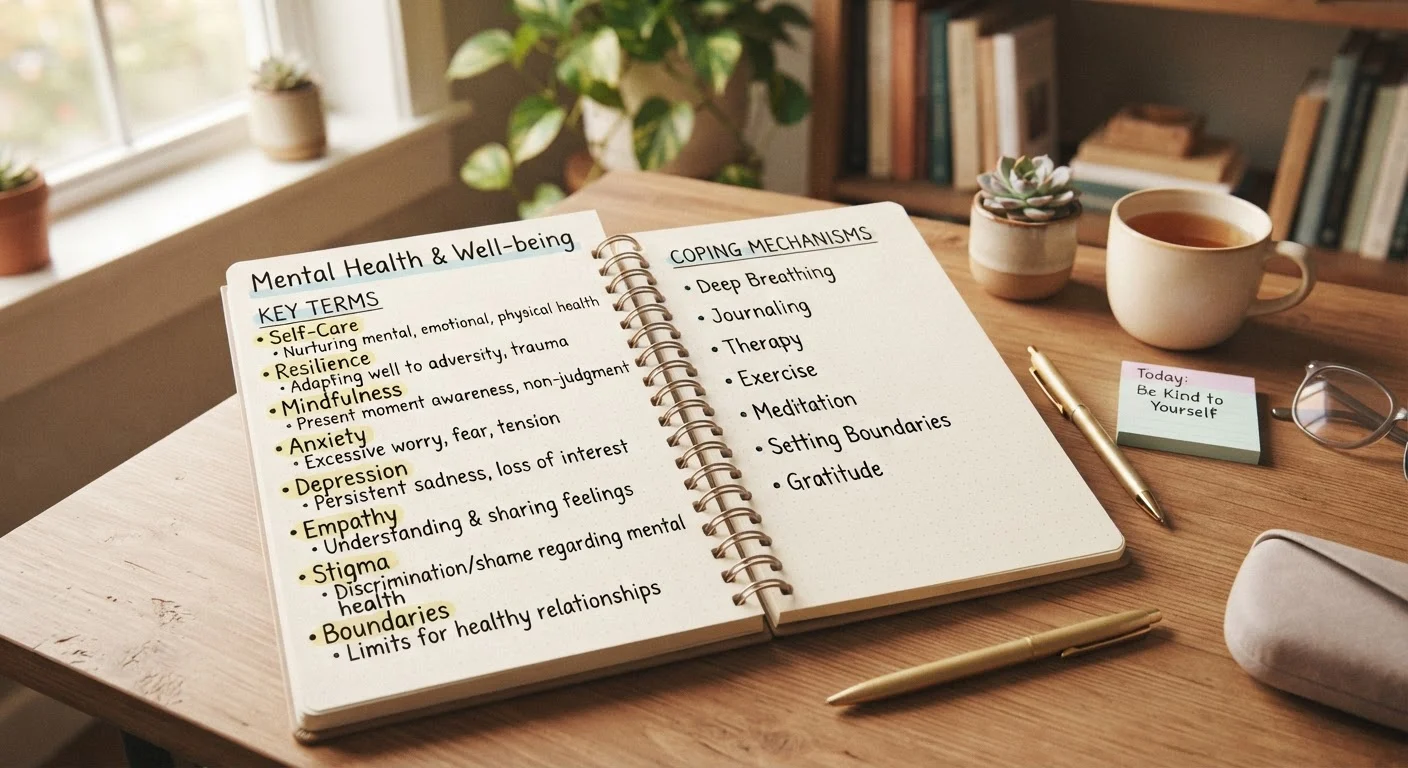
Mental health vocabulary shows up everywhere - in doctor's offices, therapy waiting rooms, news headlines, and everyday conversations. Yet many of these terms are used loosely, inconsistently, or in ways that can confuse rather than clarify. Understanding what words actually mean helps people recognize their own experiences, communicate more effectively with providers, and reduce the stigma that often surrounds mental health struggles.
This reference guide defines key terms in plain, accessible language. It is not a diagnostic tool or a substitute for professional care. For a broader look at what mental health actually encompasses, see what the term really covers. If you are new to thinking intentionally about mental wellness, this beginner's starting point offers helpful context alongside these definitions.
This article is for general informational purposes only and does not constitute medical advice. Always consult a qualified healthcare professional for questions about your mental health.
Mental health
A person's overall emotional, psychological, and social well-being. It affects how people think, feel, and act, and influences how they handle stress, relate to others, and make decisions. Mental health exists on a spectrum and changes over time.
Anxiety
A feeling of worry, nervousness, or unease, often about an uncertain outcome. As a clinical term, anxiety disorders involve excessive, persistent fear or worry that significantly interferes with daily life and functioning.
Depression
More than sadness, clinical depression (major depressive disorder) involves a persistent low mood, loss of interest in activities, changes in sleep or appetite, and difficulty functioning - lasting weeks or longer. It is a recognized medical condition, not a personal failing.
Cognitive distortion
An inaccurate or exaggerated thought pattern that reinforces negative emotions. Examples include all-or-nothing thinking ('If I'm not perfect, I'm a failure') or catastrophizing ('Everything will go wrong'). Identifying distortions is a core part of cognitive behavioral therapy (CBT).
Psychosocial
Relating to the interplay between psychological factors (thoughts, emotions, behavior) and social factors (relationships, community, environment). A psychosocial approach to health considers both the inner experience and the external context shaping it.
Resilience
The capacity to adapt and recover from adversity, stress, or difficult life events. Resilience is not a fixed trait - it can be developed through supportive relationships, coping skills, and access to resources.
Stigma
Negative attitudes, stereotypes, or discrimination directed at people with mental health conditions. Stigma can prevent people from seeking help and is considered a major barrier to mental health care access.
Psychotherapy
A structured, evidence-based approach to treating mental health conditions through conversation between a trained therapist and a client. Different modalities (CBT, DBT, psychodynamic therapy) use different frameworks and techniques.
Coping strategies
Behaviors and thought patterns used to manage stress, difficult emotions, or challenging situations. They can be adaptive (exercise, talking to someone) or maladaptive (avoidance, substance use).
Emotional regulation
The ability to recognize, understand, and manage one's emotional responses in a way that is healthy and appropriate to the context. It is a skill that can be strengthened through practice and therapy.
Comorbidity
The presence of two or more health conditions in the same person at the same time. For example, anxiety and depression frequently occur together. Understanding comorbidity helps clinicians provide more comprehensive care.
Self-efficacy
A person's belief in their own ability to succeed in specific situations or accomplish a task. Higher self-efficacy is associated with better mental health outcomes and greater motivation to engage in healthy behaviors.
Terms You'll Encounter Most Often
These definitions cover concepts that appear frequently in conversations about mental health care, self-care, and emotional well-being. They're organized to build understanding progressively rather than alphabetically.
| How common are mental health conditions? | About 1 in 5 U.S. adults experience a mental illness in any given year (National Institute of Mental Health (NIMH)) |
| Treatment gap | More than half of adults with mental illness do not receive treatment (SAMHSA National Survey on Drug Use and Health) |
| Stigma as a barrier | Stigma is consistently cited as one of the top reasons people avoid seeking mental health care (American Psychological Association) |
| Most commonly diagnosed condition | Anxiety disorders affect approximately 19% of U.S. adults annually (NIMH epidemiological estimates) |
| Therapy effectiveness | Psychotherapy is effective for a wide range of mental health conditions across age groups (American Psychological Association, Division 12) |
Clinical vs. Everyday Use
Some terms - like anxiety or depression - are used casually in everyday speech and more precisely in clinical settings. Feeling anxious before a job interview is different from a clinician-diagnosed anxiety disorder. Recognizing this distinction helps reduce stigma: clinical diagnoses describe persistent, impairing patterns of experience, not ordinary emotional responses.
When Terms Overlap
Words like counseling, therapy, and psychotherapy are often used interchangeably, but they have meaningful distinctions depending on context and provider training. For a detailed breakdown, see how therapy, counseling, and psychiatry differ.
Self-Advocacy Starts With Vocabulary
Knowing these terms makes it easier to describe your experiences accurately - to a doctor, a trusted friend, or yourself. If you're thinking about opening up to someone close to you, guidance on having that conversation may help you find the right words.