
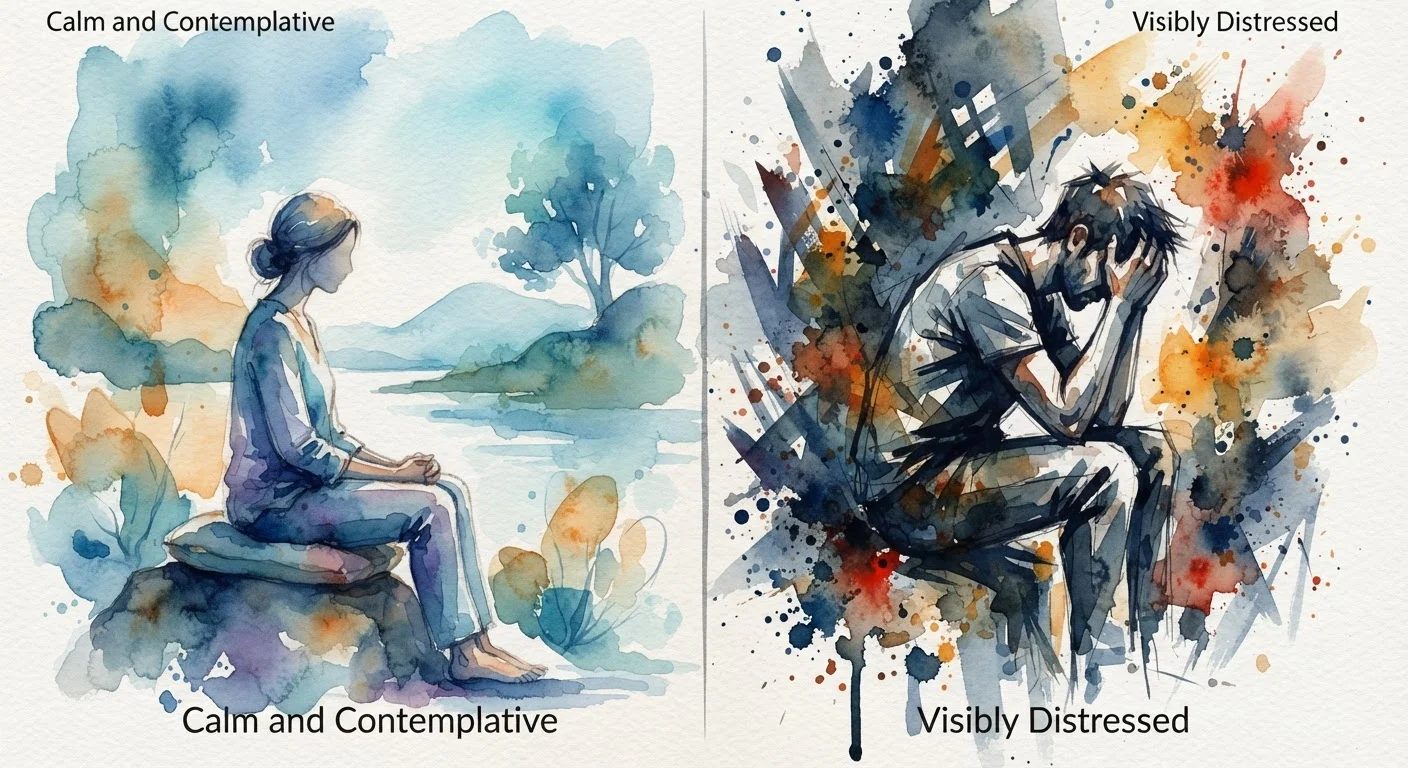
What Worry Is Supposed to Do
Worry is not the enemy. From an evolutionary standpoint, anxiety is the brain's threat-detection system - it focuses attention, sharpens decision-making, and motivates protective action. Feeling nervous before a medical appointment or stressed during a financial crunch is the mind doing exactly what it is designed to do.
Everyday worry tends to share a few recognizable qualities: it is tied to a specific, identifiable situation; it is roughly proportional to the actual risk involved; and it eases once the stressor passes or the person takes action. Most people experience this kind of worry regularly without it significantly disrupting their lives.
Mental health professionals do not view this as pathological. In fact, the complete absence of anxiety in genuinely threatening situations would itself be a clinical concern. The goal is not a worry-free life - it is a worry that stays within functional bounds.
How Clinicians Define an Anxiety Disorder
The shift from normal worry to a diagnosable disorder is not about having anxiety - it is about the degree, duration, and downstream impact of that anxiety. According to the Diagnostic and Statistical Manual of Mental Disorders (DSM-5), used widely by U.S. clinicians, anxiety disorders are characterized by fear or anxiety that is excessive relative to the actual situation, difficult or impossible to control, and persistent - typically present for six months or more for conditions like Generalized Anxiety Disorder.
Critically, the anxiety must cause clinically significant distress or impairment in social, occupational, or other important areas of functioning. That last criterion matters enormously. It is not the feeling itself but its real-world consequences - avoiding social events, missing work, being unable to sleep - that cross the diagnostic threshold.
| Criterion | Everyday Worry | Anxiety Disorders |
|---|---|---|
| Trigger | Identifiable, specific stressor | Often diffuse or disproportionate to situation |
| Duration | Resolves when stressor passes | Persistent (often 6+ months) |
| Controllability | Generally manageable | Difficult or impossible to control |
| Functional impact | Minimal disruption to daily life | Significant impairment in work, relationships, or self-care |
| Physical symptoms | Mild, situational (e.g., butterflies) | Recurring somatic symptoms (e.g., chest tightness, insomnia) |
| Treatment needed | Self-care strategies often sufficient | Professional evaluation and evidence-based treatment recommended |
Common anxiety disorders recognized in clinical practice include Generalized Anxiety Disorder (GAD), Panic Disorder, Social Anxiety Disorder, and specific phobias, among others. Each has its own clinical profile, but all share this core pattern of disproportionate, impairing anxiety.
This article is for general informational and educational purposes only and does not constitute medical advice. If you are concerned about your mental health, please consult a qualified healthcare professional.
Why the Distinction Matters - and Why Stigma Gets in the Way
Understanding this clinical line serves a practical purpose: it helps people know when self-care strategies are sufficient and when professional support is warranted. Breathing exercises, sleep hygiene, and social connection genuinely help manage everyday stress. For a diagnosable anxiety disorder, these tools can complement - but typically should not replace - evidence-based treatment such as cognitive behavioral therapy (CBT) or, where appropriate and under medical supervision, medication.
When to Seek Professional Support
If anxiety is interfering with your work, relationships, sleep, or ability to enjoy daily life - or if you are using substances to manage it - a conversation with a primary care provider or licensed mental health professional is a reasonable and important next step. Early intervention is associated with better outcomes. You do not need to be in crisis to ask for help.
Stigma remains one of the biggest barriers to care. Anxiety disorders are sometimes dismissed as excessive sensitivity or a lack of resilience - framings that are not supported by clinical science. Research consistently shows that anxiety disorders involve measurable differences in how the brain processes threat, and they respond well to treatment. According to the Anxiety and Depression Association of America, anxiety disorders affect an estimated 40 million adults in the United States each year, yet only a minority receive treatment.
Recognizing that anxiety disorders are legitimate medical conditions - not character flaws - is not just compassionate. It is accurate.