
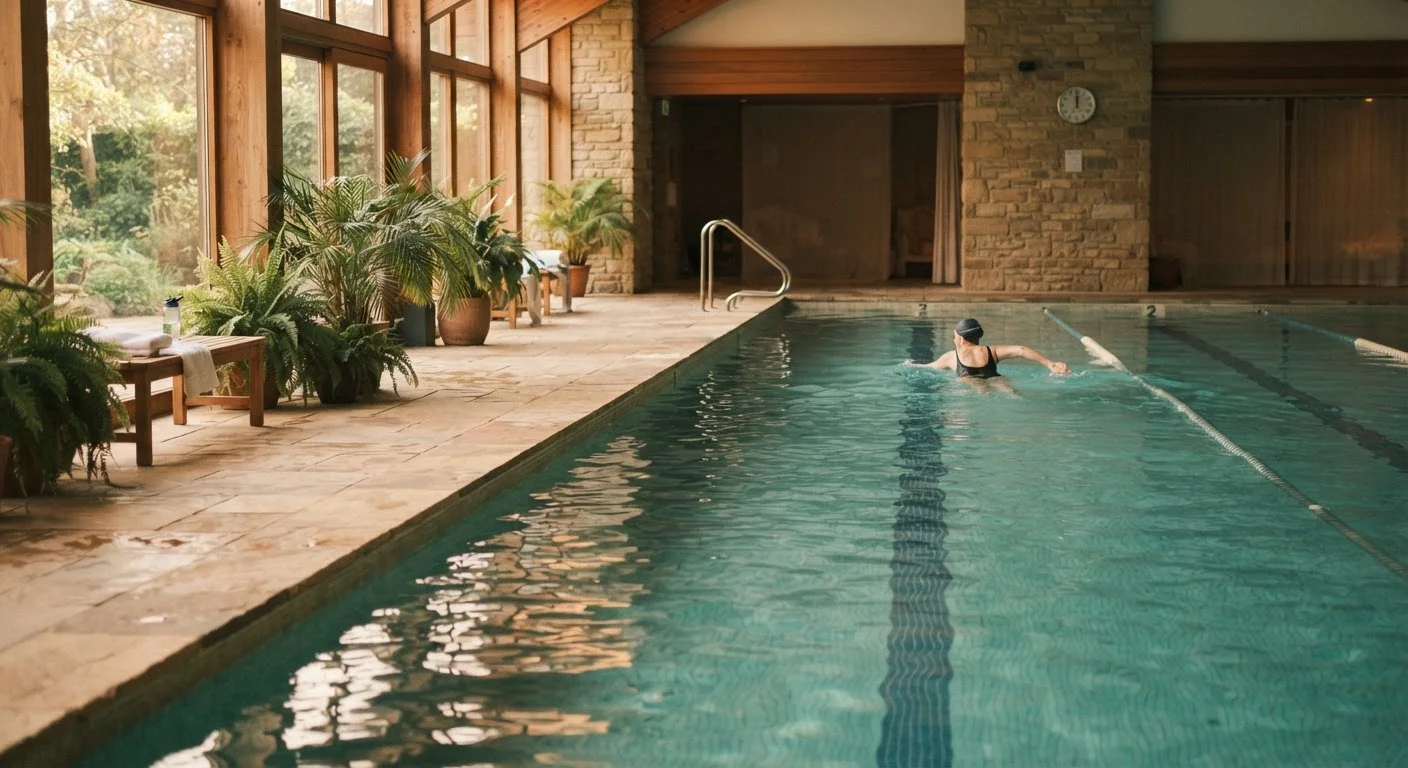
Movement Doesn't Have to Hurt Your Joints
Joint pain - whether from osteoarthritis, a past injury, or chronic inflammation - is one of the most common reasons people pull back from physical activity. That instinct is understandable, but movement avoidance often makes things worse over time. Research consistently supports gentle, appropriate exercise as a key tool for managing joint pain, maintaining mobility, and supporting overall health.
The term low-impact exercise refers to activities that minimize the jarring, repetitive force transmitted through joints - particularly the knees, hips, ankles, and spine. Unlike high-impact activities (think running or jump training), low-impact options keep at least one foot on the ground, use water buoyancy, or rely on smooth, controlled motion. That distinction matters when joints are sensitive or healing.
If you're new to exercising with joint limitations, our guide to building movement habits from scratch offers practical, gradual strategies. And it's worth unlearning the idea that exercise must hurt to work - a point explored in depth in our piece on common fitness myths worth reconsidering.
This article provides general health information only and is not a substitute for personalized medical or physical therapy advice. Always consult a qualified healthcare provider before starting or changing an exercise routine, especially if you have a diagnosed condition or injury.
Swimming and Water Aerobics
Water-based exercise is widely regarded as one of the most joint-friendly forms of movement available. Buoyancy offloads a significant portion of body weight - reducing the compressive forces acting on knees, hips, and the spine - while water resistance provides a gentle but effective workout for muscles and the cardiovascular system.
Swimming laps, water walking, and group water aerobics classes all qualify. Many community pools and YMCAs offer aquatic programs specifically designed for older adults or those with arthritis. The warmth of heated pools can also help ease stiffness before exercise begins.
Buoyancy dramatically reduces joint compression, making water exercise uniquely accessible for pain-limited movers.
Stationary or Recumbent Cycling
Cycling - particularly on a stationary bike or a recumbent model - offers rhythmic, repetitive lower-body movement without the impact of weight-bearing activities. The circular pedaling motion tends to be gentle on the knees when the seat is positioned correctly (a slight bend in the knee at the bottom of the pedal stroke is the general target).
Recumbent bikes provide additional back support and a more relaxed posture, which may be preferable for those with hip or lumbar joint issues. Resistance can be dialed up or down easily, making progression straightforward and self-directed.
Correct seat height on a stationary bike makes a meaningful difference in how much stress reaches the knee joint.
Walking on Appropriate Surfaces
Walking is often the most accessible starting point - no equipment, no gym, and adjustable pace. While it is technically a weight-bearing activity, it remains low-impact compared to running or jumping. Surfaces matter: grass, rubberized tracks, or packed dirt paths are more forgiving than concrete or asphalt.
Supportive footwear that matches your gait and terrain is worth attention. For some people, walking poles can redistribute load away from lower-body joints. Our dedicated article on what walking can and cannot do for your health offers a balanced evidence-based perspective on its benefits and limits.
Surface choice and footwear can meaningfully change how much stress walking places on vulnerable joints.
Tai Chi
Tai chi is a traditional Chinese practice involving slow, flowing movements performed in a standing position. Its deliberate, low-velocity nature makes it inherently joint-friendly, while its emphasis on balance, coordination, and body awareness offers benefits that purely cardiovascular activities don't always provide.
A body of research - including studies published in journals like Arthritis Care & Research - supports tai chi for reducing pain and improving physical function in people with osteoarthritis, particularly of the knee. Most movements can be modified for those with limited range of motion, and many community centers offer beginner classes.
Tai chi's slow, deliberate movements build balance and reduce joint pain without demanding high physical output.
Yoga (with Appropriate Modifications)
Yoga encompasses a wide range of styles - from vigorous vinyasa flows to gentle restorative or chair-based practices. For people with joint concerns, the latter categories are generally more appropriate. Chair yoga in particular adapts traditional poses to a seated position, removing significant weight-bearing demand from the lower extremities.
Props like blocks, straps, and bolsters allow practitioners to reduce range-of-motion demands on affected joints. Transparency with an instructor about your limitations is important - a well-trained yoga teacher can offer alternatives to poses that would otherwise place problematic load on a sensitive area.
Chair yoga and prop-supported modifications make yoga genuinely accessible for people with significant joint limitations.
Elliptical Training
The elliptical machine simulates a walking or running motion while the feet remain in contact with moving platforms throughout the stride cycle. This eliminates the foot-strike impact associated with treadmill running and can be considerably easier on the knees and hips for many users.
Resistance and incline adjustments allow for a wide range of workout intensities. Upper-body handlebars engage the arms and distribute effort more broadly. For people who miss the feel of walking or running but need to reduce impact, the elliptical is often a well-tolerated middle ground - though individual joint response varies, and a trial period with attentive self-monitoring is sensible.
The elliptical's continuous foot contact eliminates the impact spike that makes running problematic for many joints.
Getting Started Safely and Sustainably
Whichever activity appeals to you most, a few principles apply broadly. Start at a lower intensity and duration than you think you need - joints respond to load gradually, and even five to ten minutes of daily movement can build meaningful habit and adaptation over time. Pay attention to the difference between mild muscle fatigue (normal) and sharp, stabbing, or worsening joint pain (a reason to stop and reassess).
Listen to Your Body - Not Just the Clock
With joint pain, the goal isn't to push through discomfort to hit a time target. Stop if you feel sharp, worsening, or unfamiliar joint pain during any activity. Mild muscle tiredness is expected; joint pain that lingers beyond 24 hours after exercise is a signal to revisit your program with a healthcare provider. Progress should feel gradual and sustainable, not heroic.
Warming up before and cooling down after any session also matters more when joints are involved. Our article on what warming up and cooling down actually accomplish explains the physiology behind each phase in plain terms.
A physical therapist can be particularly valuable here - they can assess your specific joint mechanics, recommend modifications, and progress your program safely. Movement is medicine, but like any medicine, the right dose and form depend on the individual.