
What Makes These Two Approaches Different
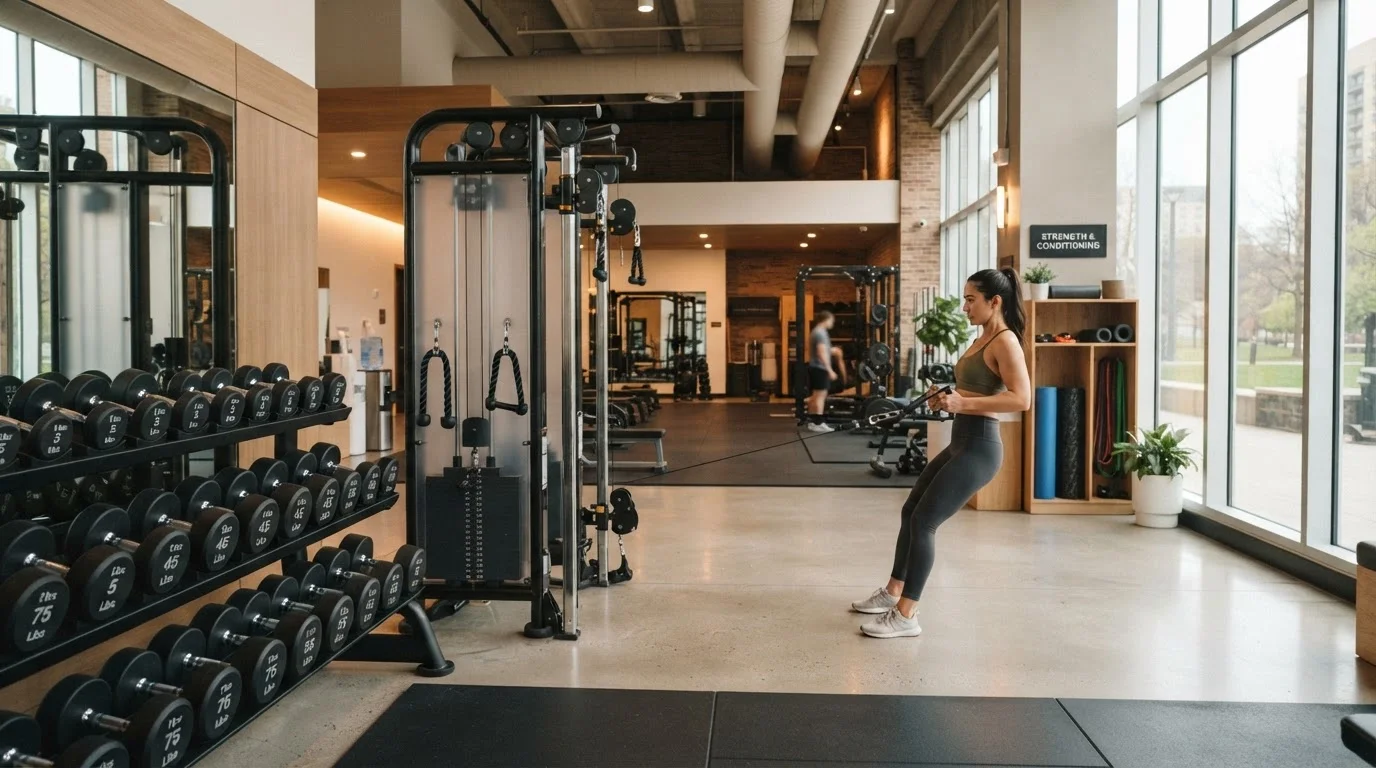
Free weights - dumbbells, barbells, kettlebells - require your body to control the load in three-dimensional space. That means the muscles doing the lifting aren't working alone; stabilizing muscles throughout your core, joints, and surrounding tissue fire simultaneously to keep the weight on track. Resistance machines, by contrast, move along a pre-set mechanical path. The machine provides structure, so your nervous system can focus almost entirely on the target muscle rather than balance and coordination.
This distinction has real consequences for how each tool develops your body. Research in exercise science consistently shows that free weights produce greater activation of secondary and stabilizing muscles compared with machines performing the same primary movement. That broader recruitment can translate to more functional strength - the kind that transfers to carrying groceries, climbing stairs, or athletic performance. However, that same complexity raises the learning curve and increases the margin for technique error.
Understanding the difference between muscle-isolating and compound movement strategies also connects to broader principles around strength training versus cardiovascular exercise - both conversations are really about choosing tools that match your specific goals.
Head-to-Head: Key Criteria
Looking at both tools across practical factors makes the trade-offs clearer. Neither scores higher across the board - the right choice shifts depending on your situation.
| Criterion | Free Weights | Resistance Machines |
|---|---|---|
| Muscle recruitment | High - includes stabilizers | Targeted - primary muscle focus |
| Technique demand | Higher - form is critical | Lower - movement is guided |
| Injury risk for beginners | Moderate to higher | Generally lower |
| Functional strength transfer | Strong - mimics real movement | Limited - fixed plane only |
| Versatility | High - many exercises per tool | Low - one or few movements |
| Rehabilitation suitability | Varies - needs supervision | Often preferred - controlled load |
| Home-use practicality | Yes - adjustable sets available | Rarely - requires gym access |
Cost and space are worth noting: free weights, especially a set of adjustable dumbbells, can be used at home, while most machines require gym access. If you're thinking through your overall training environment, an honest comparison of home workouts and gym training can help clarify what actually fits your life.
Who Benefits Most From Each
Free weights tend to suit: people with some training experience who want compound, multi-joint exercises; those aiming to improve athletic performance or functional movement; and individuals who train across different settings and value versatility.
Resistance machines tend to suit: beginners who benefit from guided movement while learning proper mechanics; people managing injuries or physical limitations who need controlled, isolated loading; and experienced lifters using machines strategically for specific muscle development after compound work.
Exercise science professionals frequently recommend integrating both rather than treating them as competing options. A common approach is to begin a workout with compound free-weight movements - when energy and focus are highest - and use machines for targeted isolation work afterward. If you're building a realistic weekly plan, see our guide on building a weekly movement routine that fits your life for a practical framework.
It's also worth remembering that the most important variable in any training plan is adherence over time. As discussed in the evidence behind why consistency beats intensity in long-term fitness, the tool you'll actually use regularly almost always outperforms the theoretically optimal one you avoid.
This article is for general informational and educational purposes only and does not constitute medical or professional fitness advice. If you are new to exercise, managing a health condition, or recovering from injury, consult a qualified healthcare provider or certified fitness professional before beginning a new training program.