How Each Option Actually Works
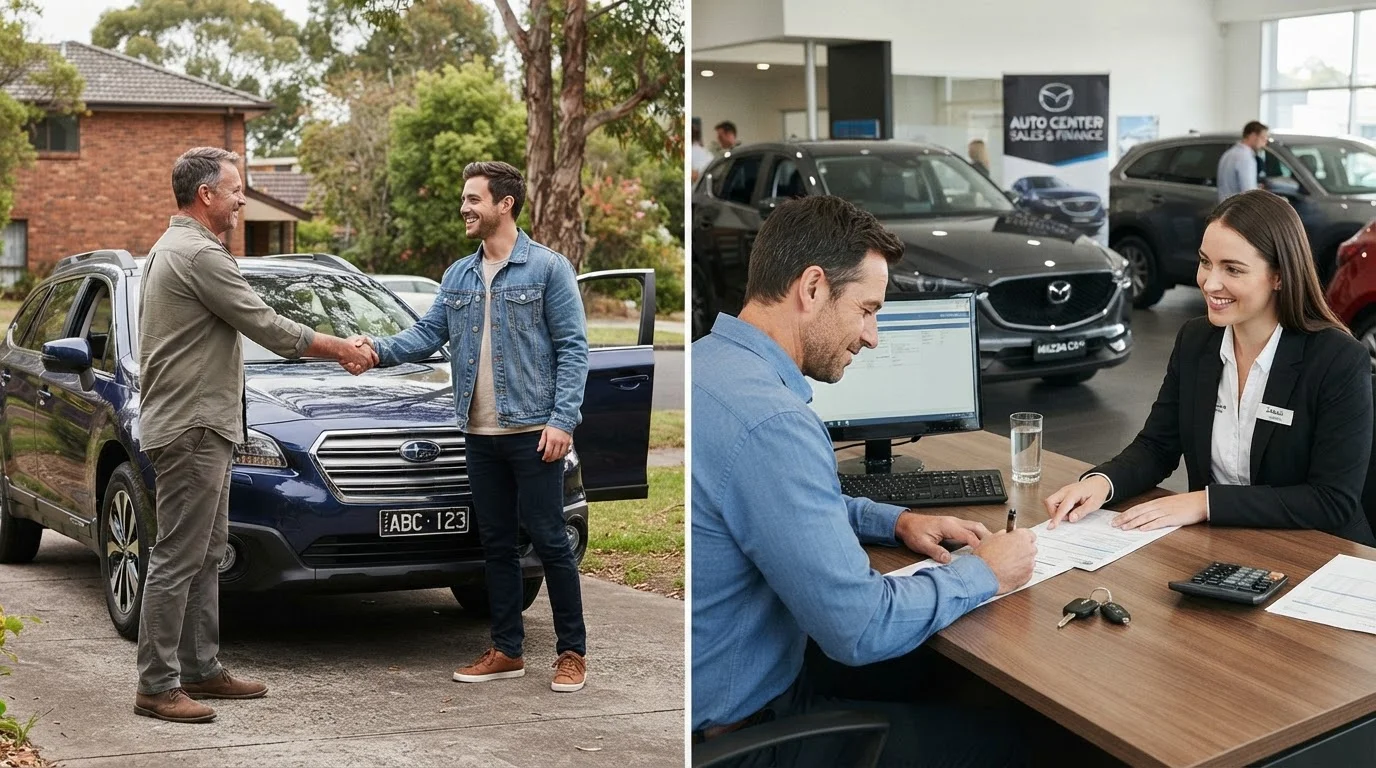
When you sell a car privately, you're handling the transaction directly with another individual - setting the price, marketing the vehicle, fielding inquiries, arranging test drives, and managing the title transfer yourself. When you trade in at a dealership, you hand the car over to the dealer in exchange for credit toward another vehicle or, in some cases, a direct cash offer.
Both paths are legitimate and widely used. The right choice depends on factors like how much equity you have in the car, how quickly you need to move it, and whether you're also buying a replacement vehicle. If you're weighing a similar buy-vs.-convenience trade-off for your next purchase, this breakdown of financing vs. paying cash offers useful context.
The Money Side: What You're Likely to Get
The single biggest financial difference is the sale price. Private buyers are typically willing to pay closer to a car's retail market value because they're purchasing for personal use. Dealers, by contrast, need to profit on the resale, so their trade-in offers generally reflect a wholesale price - often several hundred to a few thousand dollars below what a private buyer might pay.
That gap isn't fixed. High-demand vehicles, low-mileage cars in excellent condition, and models that are scarce in local inventory can all narrow the spread. Still, as a general rule, sellers who go private tend to walk away with more money.
One counterpoint: in many states, trading in a vehicle before purchasing a new one from the same dealer reduces the taxable purchase price of the new car. Depending on your state's sales tax rate and the value of your trade, this tax savings can partially - or in some cases fully - offset the difference between a trade-in offer and a private sale price. Check your state's specific rules before assuming one route is clearly superior on dollars alone.
| Private Sale | Dealer Trade-In | |
|---|---|---|
| Typical sale price | Closer to retail market value | Wholesale/below market value |
| Time to complete | Days to weeks | Same day or next day |
| Effort required | High - listing, vetting, paperwork | Low - dealer manages most steps |
| Loan payoff handling | Seller coordinates with lender | Dealer pays off lender directly |
| Sales tax benefit on new car | None | May reduce taxable purchase price |
| Personal risk | Moderate - meeting strangers, fraud risk | Minimal |
| Title transfer | Seller responsible | Dealer handles |
Time, Effort, and Risk
Selling privately takes work. You'll need to price the vehicle accurately using tools like market-value guides, write a compelling listing with good photos, respond to inquiries, vet prospective buyers, and coordinate a safe meeting location for test drives. Once you find a buyer, you'll handle the title transfer and bill of sale - requirements that vary by state.
There's also some personal risk involved: meeting strangers, accepting payment (cashier's checks can be fraudulent - verified bank transfers are generally safer), and the possibility that a deal falls through at the last minute.
A dealer trade-in eliminates nearly all of that friction. You bring the car in, get an appraisal, and if you accept the offer, the paperwork is handled for you. The whole process can take a few hours. If you have an outstanding loan on the vehicle, the dealer will typically pay it off directly and apply any remaining equity to your new purchase - though you should verify this process in writing.
When You Have an Outstanding Loan
If you still owe money on the car, both options require settling that loan. In a private sale, you'll need to coordinate with your lender to release the title to the new owner - a process that can be straightforward or complicated depending on the lender and your state's titling system. Some sellers pay off the loan before listing; others work out the payoff at the time of sale.
With a trade-in, the dealer handles the payoff directly with your lender, which is simpler - but you should confirm the exact payoff amount yourself before signing anything. If you owe more than the car is worth (sometimes called being "underwater" on the loan), the negative equity may be rolled into your new vehicle financing, which increases what you'll owe going forward.
Paperwork and Legal Requirements
Every state has its own requirements for transferring vehicle ownership. At minimum, a private sale typically involves signing over the title, providing an odometer disclosure, and in some states filing a release-of-liability notice with the DMV. Skipping these steps can leave you legally tied to the vehicle after it leaves your hands - including liability if the new owner is involved in an accident or accrues unpaid tickets.
Dealers handle most of this on your behalf in a trade-in, which removes the administrative burden. That said, it's still worth reviewing any documents you sign and confirming that the title is properly transferred out of your name.
The documentation side of a vehicle sale shares some similarities with selling other types of property. For a sense of how private sellers in real estate manage a similar process, the trade-offs of selling a home without an agent draw a useful parallel.
This article is for general informational purposes only. Tax rules, title requirements, and loan payoff processes vary by state and lender. Consult your state's DMV, a qualified tax professional, or your lender for guidance specific to your situation.