
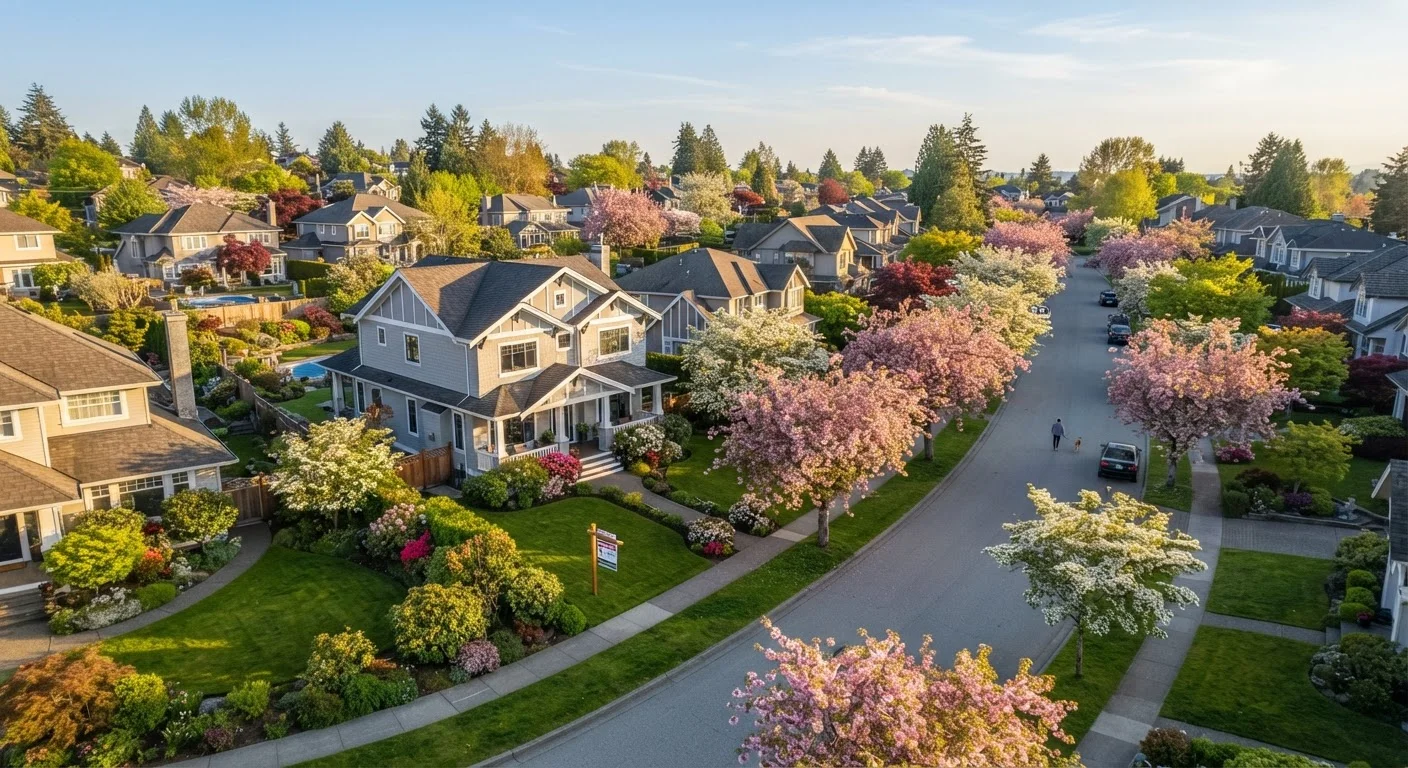
How Seasons Shape Buyer Demand
The U.S. housing market follows recognizable seasonal rhythms that affect buyer activity, listing volume, and ultimately sale prices. Understanding these patterns helps sellers make more deliberate decisions about when to list - rather than defaulting to conventional wisdom that may not apply to their specific market or property type.
Broadly, buyer demand tends to peak in late spring and early summer, then cool through fall and winter. However, "peak demand" doesn't automatically mean "best outcome for sellers." When more buyers are active, more sellers are also competing for their attention, which can offset the advantage of higher traffic.
Sellers who understand the seasonal interplay between supply and demand - not just demand in isolation - are better positioned to choose a listing window that aligns with their goals, whether that's a fast close, a strong price, or both.
Season-by-Season Breakdown
Spring (March-May)
Spring is widely considered the most active listing season in most U.S. markets. Warmer weather, the end of the school year on the horizon, and tax refund availability tend to drive buyer urgency. Homes listed in spring typically see more showings and, in competitive markets, more multiple-offer situations. That said, inventory also rises sharply, meaning sellers face more direct competition. Presentation matters enormously - see what the evidence says about staging before making assumptions about how preparation affects outcomes.
Summer (June-August)
Early summer extends much of the spring momentum, particularly for family-oriented homes where buyers want to close before the school year begins. By mid-to-late summer, activity often softens. Vacation schedules and heat in certain regions reduce buyer motivation. Homes listed too late in summer risk entering the slower fall market without the benefit of peak-season attention.
Fall (September-November)
Fall brings a secondary - and often underestimated - wave of buyer activity. Buyers who didn't find a home in spring or summer remain motivated. Inventory begins to thin, reducing seller competition. Homes that photograph well in autumn foliage can present attractively online. Pricing strategy becomes especially critical in this window; how you set your listing price can determine whether you close before the holiday slowdown or carry the listing into winter.
Winter (December-February)
Winter is the slowest period for most markets. However, sellers who do list face significantly reduced competition. Buyers active in winter are often highly motivated - relocating for work, facing a lease deadline, or pursuing a specific property type. Days on market tend to be longer, but serious offers are more common than casual inquiries. In warm-weather metros like Phoenix, Miami, or parts of Texas, the seasonal dip is far less pronounced.
Regional Variation and Local Market Conditions
National seasonal patterns are useful as a baseline, but local market conditions regularly override them. In Sun Belt cities, mild winters sustain buyer activity year-round. In mountain or northern markets, harsh winters create a more pronounced seasonal gap. Urban condo markets often behave differently from suburban single-family markets even within the same metro.
Before settling on a listing window, sellers should review recent local data - specifically months of supply, median days on market by season, and local absorption rates - ideally with a licensed real estate professional familiar with the neighborhood. If you're weighing whether to use an agent at all, a comparison of agent-assisted versus FSBO selling outlines key tradeoffs.
Sellers should also consider their own timelines. A seller who must close by a specific date may find that listing in a slower season with motivated buyers is more practical than waiting for spring and risking a rushed negotiation. For a fuller view of what typically happens once offers come in, understanding how home sale negotiations unfold is worth reviewing in advance.
This article provides general real estate information for educational purposes and does not constitute personalized legal, financial, or real estate advice. Consult a licensed real estate professional for guidance specific to your property and market.