
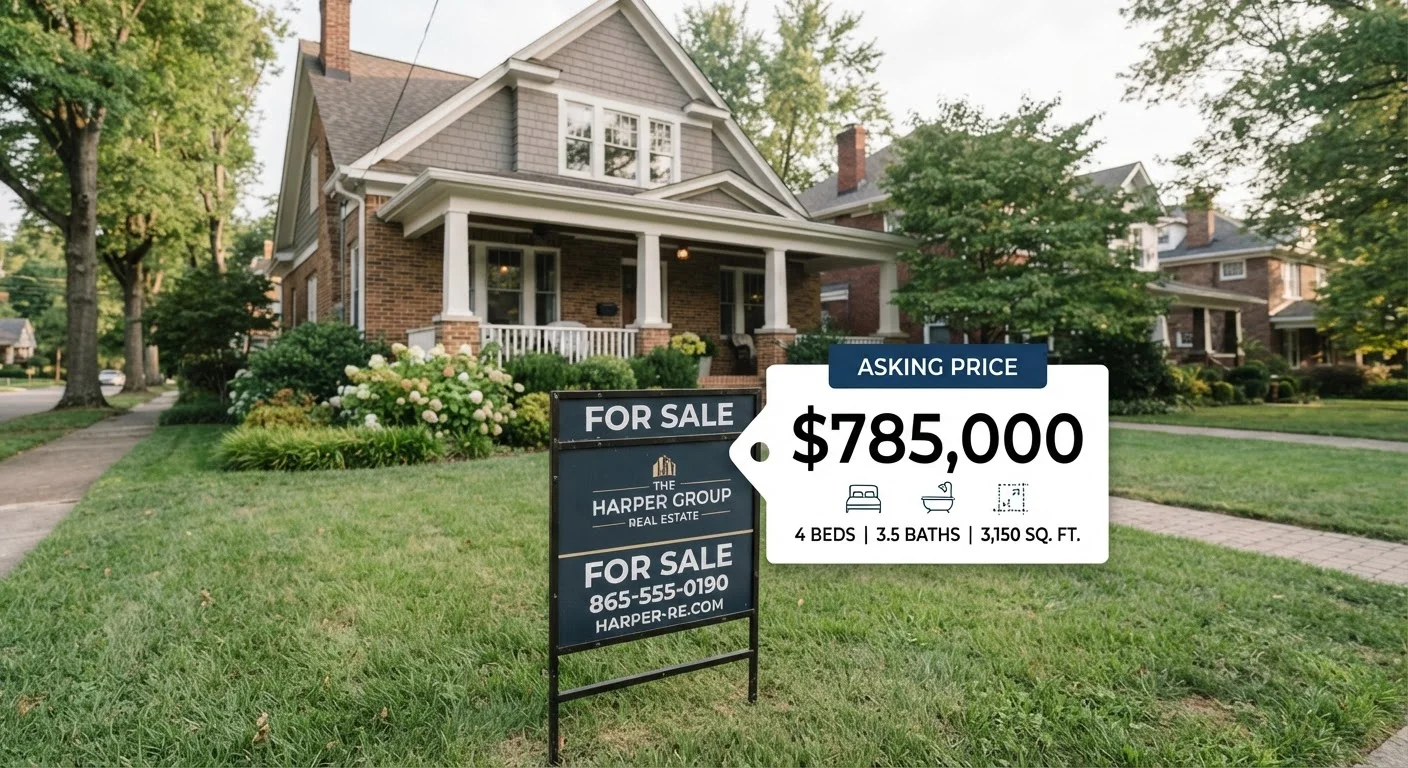
Why Listing Price Is the Most Consequential Decision a Seller Makes
Before a single buyer walks through the door, the listing price has already done significant work. It determines which searches your home appears in, which buyers schedule showings, and whether agents consider it competitive with nearby listings. In essence, pricing sets the entire trajectory of a sale.
Most buyers shop within defined price brackets - for example, searching between $350,000 and $400,000. A home priced at $410,000 becomes invisible to that pool entirely, no matter how well it photographs or how recently it was renovated. This filtering effect means that even a modest overestimate can dramatically shrink your audience before negotiations ever begin.
For sellers trying to understand the full picture, it also helps to know how representation choices affect outcomes. See our overview of selling with an agent vs. FSBO for context on how pricing guidance differs depending on your approach.
The Overpricing Trap: How It Plays Out Over Time
Overpricing is the most common pricing mistake sellers make, and its consequences tend to compound. When a home first lists, it receives its highest level of organic interest - buyers who have been waiting for inventory act quickly. If the price is too high, that initial surge passes without offers, and the listing ages.
Days on market (DOM) - the publicly visible count of how long a home has been listed - becomes a liability once it climbs. Buyers and their agents treat a high DOM as a signal: either the property has a problem, or the seller is unrealistic. Both interpretations invite lower offers or discourage showings altogether.
~5%
Average price reduction on stale listings
Industry analyses have found that homes requiring at least one price reduction typically sell for roughly 5% less than comparable homes priced correctly from the start.
2-3 weeks
Peak buyer interest window after listing
Real estate practitioners generally observe that newly listed homes receive the greatest concentration of showings and inquiries within the first two to three weeks on market.
3%-5%
Typical overpricing margin that deters buyers
Pricing a home even 3-5% above comparable sales can meaningfully reduce the pool of buyers who see the listing within relevant search filters.
Price reductions, while sometimes necessary, carry their own costs. Each reduction is a visible concession that buyers interpret as evidence of seller motivation. Rather than recovering lost ground, reductions can attract opportunistic offers well below the new asking price. Research consistently finds that homes requiring price reductions tend to sell for less than comparable homes that were accurately priced from the start.
For a deeper look at why listings stall, see why homes sit on the market too long.
Accurate Pricing and the Competitive Offer Dynamic
Homes priced at or near fair market value tend to attract a broader pool of qualified buyers in the first two to three weeks - the period when a listing generates the most traffic. In competitive markets, accurate pricing can trigger multiple-offer scenarios, which create upward pressure on the final sale price and give sellers more leverage over contingencies and closing timelines.
This is a counterintuitive insight for many sellers: the goal of pricing is not to capture every dollar of perceived value upfront, but to attract enough qualified buyers that competition does the work. A home priced $20,000 above comparable sales may deter competing offers entirely, while one priced at market value might receive two or three bids that push the final number higher.
Understanding how those negotiations unfold is equally important. Our guide on negotiating a home sale offer walks through how sellers can approach counteroffers and terms once bids arrive.
How to Establish a Defensible Listing Price
Two tools are widely used to anchor listing prices in market reality:
- Comparative Market Analysis (CMA): Prepared by a licensed real estate agent, a CMA examines recent sales of similar homes - accounting for square footage, condition, location, and features - to estimate a realistic price range. It is the most common starting point for pricing decisions.
- Professional Appraisal: A licensed appraiser conducts an independent, objective estimate of market value. While typically required by lenders during a buyer's financing process, sellers can commission one proactively to validate their pricing before listing.
Emotional attachment to a home often leads sellers to overestimate its worth. A CMA grounds that instinct in transaction data. Sellers should also factor in local market conditions - whether inventory is tight or plentiful, how long comparable homes are taking to sell, and whether prices are trending up or down in their area.
Seasonal timing also plays a role. Seasonal demand patterns can influence how aggressively you price and how quickly you're likely to receive offers, depending on when you list.
Get a CMA Before You Set a Price
Ask a licensed real estate agent for a Comparative Market Analysis before deciding on a listing price. A CMA reviews what similar homes in your area have actually sold for - not just what they were listed at. This distinction matters because list prices reflect seller hopes, while sale prices reflect buyer reality.
This article is for informational purposes only and does not constitute financial, legal, or real estate advice. Consult a licensed real estate professional for guidance specific to your property and local market conditions.