The Scope of a Standard Home Inspection
A home inspection is a systematic, visual evaluation of a property's major systems and structural components conducted by a licensed professional. It is not a pass/fail test - it is a condition report. Understanding what falls inside and outside that scope helps buyers avoid costly surprises after closing.
Most inspectors follow standards of practice set by professional associations such as the American Society of Home Inspectors (ASHI) or InterNACHI. These standards define a consistent set of systems the inspector must evaluate, giving buyers a reliable baseline regardless of which qualified inspector they hire.
Buyers are strongly encouraged to attend the inspection in person. Walking through the property with the inspector allows you to ask questions and understand the context behind each finding - information that can be harder to reconstruct from a written report alone.
What Inspectors Examine Room by Room
Inspectors work through the home methodically. While every inspection is slightly different, the following areas are consistently covered:
- Roof: Condition of shingles or other roofing material, flashing around chimneys and vents, visible signs of sagging or water intrusion.
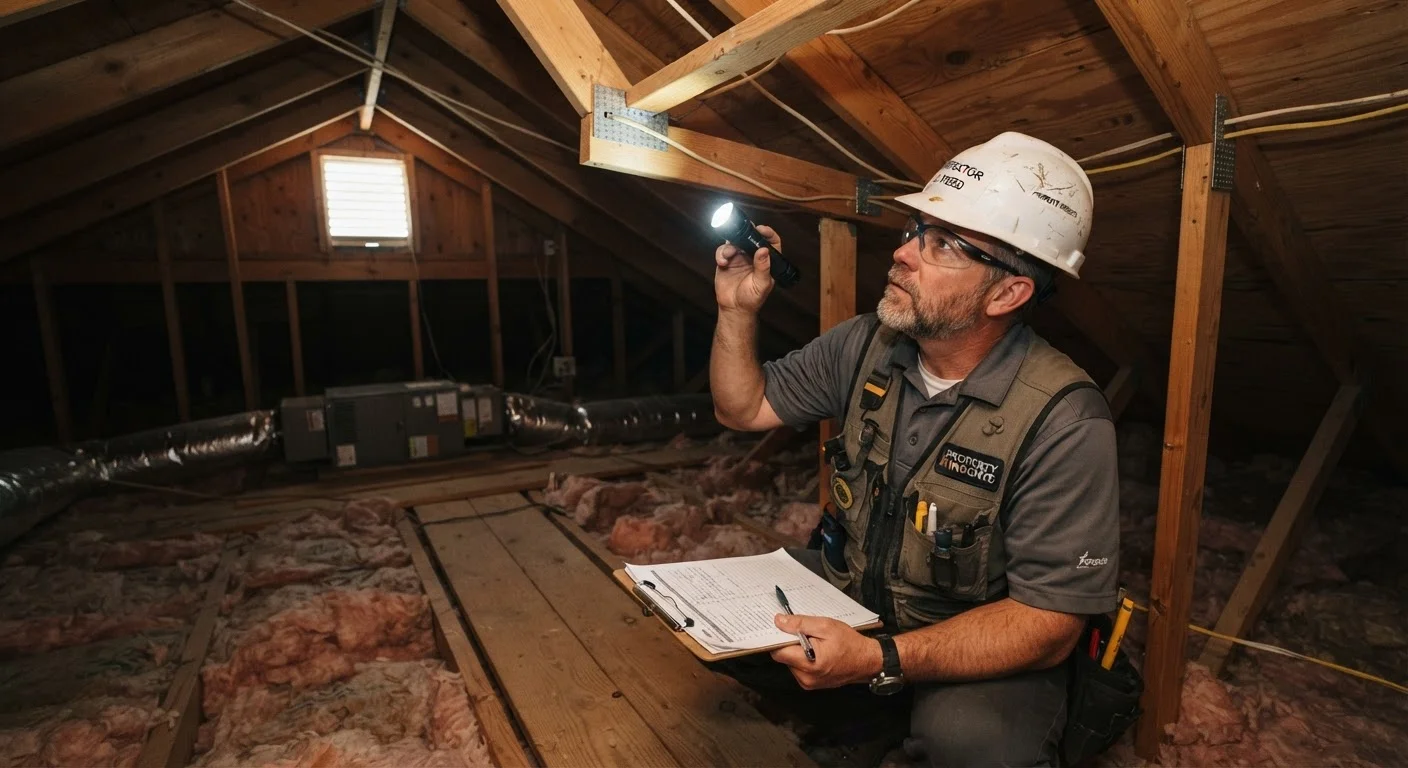
- Attic: Insulation levels, ventilation, evidence of moisture, pest activity, or improper venting from bathroom fans.
- Exterior: Siding, grading and drainage away from the foundation, driveways, decks, and porches.
- Foundation and structure: Visible cracks, signs of settlement, wood rot, and evidence of water in the basement or crawl space.
- Electrical system: Panel condition, breaker labeling, presence of grounded outlets, GFCI protection in wet areas, and any visible code concerns such as double-tapped breakers.
- Plumbing: Supply lines, drain lines, water heater age and condition, water pressure, and visible leaks under sinks.
- HVAC: Heating and cooling equipment operation, filter condition, visible ductwork, and estimated remaining life of the units.
- Interior: Walls, ceilings, and floors for water staining, cracks, or structural irregularities; windows and doors for operation and sealing. For more on window sealing issues, see common weatherproofing mistakes.
What a Home Inspection Does Not Cover
Inspections are visual and non-invasive. Inspectors do not open walls, move furniture, or test systems that are inaccessible or shut off. This is an important boundary for buyers to understand before the inspection day.
Items typically outside a standard inspection scope include:
- Radon gas levels (requires a separate test)
- Mold testing and air quality sampling
- Pest or termite inspection (often a separate service)
- Septic system evaluation
- Underground oil tanks
- Sewer line condition (requires a separate camera scope)
- Chimney interior (may require a Level II chimney inspection)
Many buyers add one or more of these specialized inspections to their due diligence, particularly for older homes. Skipping key due-diligence steps is one of the most common and costly mistakes buyers make.
GFCI outlet
Ground Fault Circuit Interrupter - a safety outlet that cuts power within milliseconds if it detects an electrical imbalance. Required by code near water sources such as kitchens, bathrooms, and garages.
Double-tapped breaker
A wiring condition where two circuits are connected to a single breaker slot. Most breakers are rated for only one wire, making this a potential fire hazard that inspectors flag for correction.
Flashing
Thin metal strips installed at roof joints, chimneys, and penetrations to prevent water from seeping into the structure. Failed flashing is a common source of roof leaks.
Inspection contingency
A clause in a purchase offer that gives the buyer the right to have the home professionally inspected and to negotiate, request repairs, or exit the contract based on the findings within a specified timeframe.
Crawl space
A low, unfinished area beneath the home's main floor, often left open to the ground. Inspectors check crawl spaces for moisture intrusion, pest activity, and structural issues.
Standards of practice
Published guidelines from professional associations such as ASHI or InterNACHI that define the minimum systems and components a licensed home inspector must evaluate during a standard inspection.
Reading the Inspection Report and Next Steps
Inspection reports can run 30 to 80 pages. Every finding is not equally urgent. Most inspectors flag items as safety hazards, major defects, or maintenance recommendations - and buyers should read them in that order of priority.
Safety hazards (faulty wiring, carbon monoxide risks, structural instability) warrant immediate attention regardless of how a negotiation plays out. Major defects - a failing roof, aging HVAC, or foundation movement - affect the property's value and habitability and are typically the basis for repair requests or price renegotiation. Maintenance items are deferred upkeep that the new owner should budget for but generally do not affect a deal.
Use the report alongside your purchase contract's inspection contingency. That contingency gives you a defined window to review findings, request repairs, ask for a price adjustment, or walk away. See how inspection contingencies protect buyers for a detailed breakdown of your options. Once you own the home, the report becomes a useful maintenance baseline - cross-reference it with a seasonal maintenance checklist to address items proactively.