How Each Lease Type Works
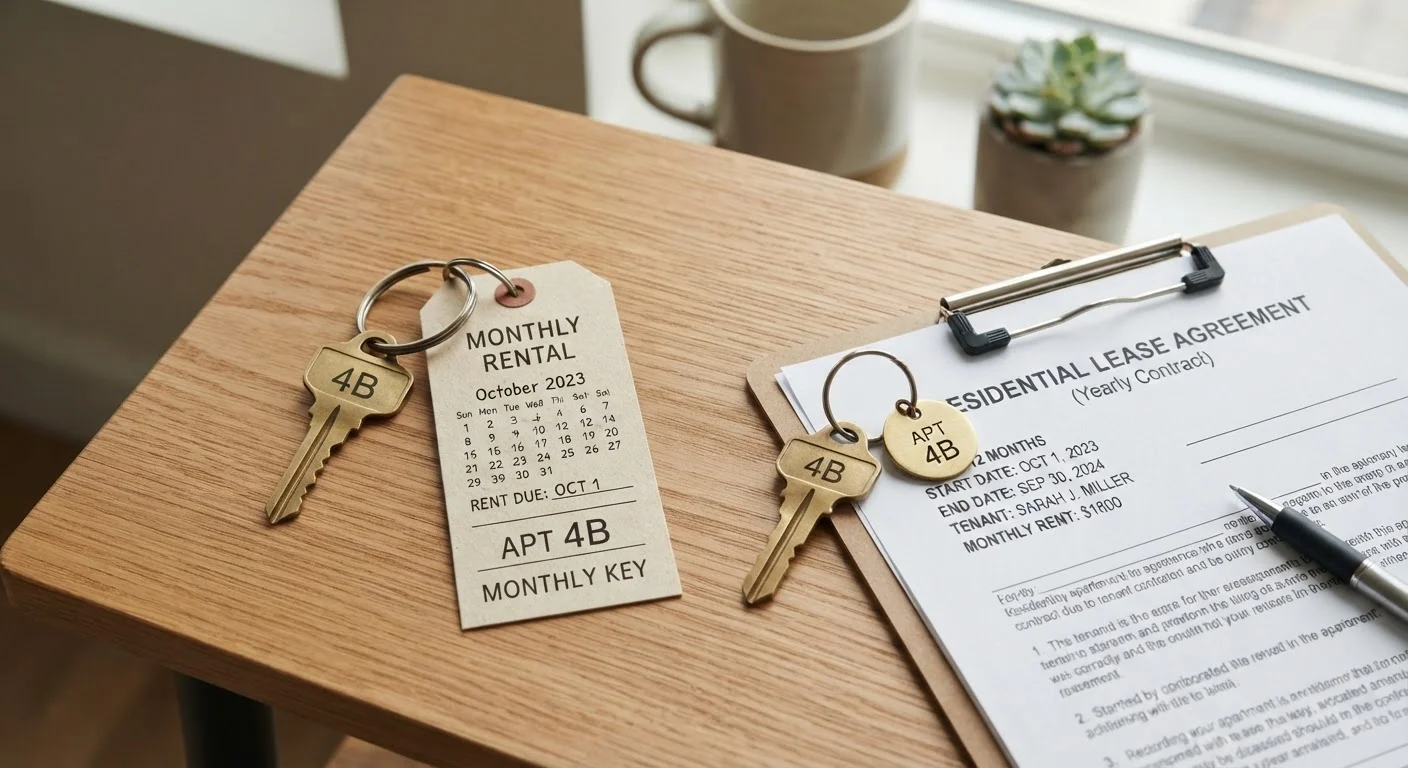
A fixed-term lease is a written agreement that binds both tenant and landlord for a specific duration - most commonly 12 months, though six-month and 24-month terms exist. During that period, the landlord generally cannot raise the rent or require you to vacate without cause, and you are obligated to pay rent through the full term unless specific exit clauses apply.
A month-to-month lease (sometimes called a periodic tenancy) renews automatically each month under the same basic terms as the original agreement. Either party - landlord or tenant - can typically end the arrangement by providing written notice, usually 30 days in advance, though some states require 60 days. In practice, many month-to-month tenancies begin when a fixed-term lease expires and neither party signs a renewal.
Before signing either type, it's worth understanding the full language of your agreement. Our guide to what a residential lease actually says breaks down common clauses in plain terms.
| Criterion | Month-to-Month Lease | Fixed-Term Lease |
|---|---|---|
| Typical duration | Renews monthly, no set end date | 6, 12, or 24 months |
| Rent stability | Can be raised with notice | Locked in for lease term |
| Monthly cost | Often $50-$200 premium | Typically lower base rent |
| Exit notice required | Usually 30-60 days | Early termination fee may apply |
| Landlord termination | 30-60 days notice, often no cause needed | Cause required before lease end |
| Best for | Short-term or uncertain plans | Stable, long-term housing needs |
Cost Differences and Financial Risks
Flexibility has a price. Landlords routinely charge a premium - often $50 to $200 or more per month - for month-to-month arrangements to compensate for the unpredictability of tenant turnover. Over six months, that premium can easily exceed the early termination fee on a fixed-term lease, making the math less obvious than it first appears.
With a fixed-term lease, the financial risk runs in the opposite direction. If you need to leave before the term ends - due to a job change, family emergency, or other life event - you may owe the landlord rent for the remaining months, a re-letting fee, or both. Some leases include a formal early termination clause that caps your liability; others do not. Read carefully before signing.
30-60
Days notice typically required to end month-to-month tenancy
Notice period requirements vary by state law; some jurisdictions mandate longer notice for tenancies over one year.
1-2 months
Typical early termination fee on fixed-term leases
Early termination clauses differ by lease; some require payment of all remaining rent if no re-letting clause exists.
It's also worth noting that landlords on month-to-month arrangements can raise rent with relatively short notice - subject to applicable state rent-increase notice laws - whereas fixed-term tenants are insulated from increases until renewal.
Legal Protections and Notice Requirements
Tenant protections vary significantly by state and, in some cases, by city. Generally speaking, fixed-term tenants have stronger short-term protections: a landlord cannot unilaterally end the tenancy before the lease expires without a legally recognized cause, such as nonpayment of rent or lease violations.
Month-to-month tenants can be asked to leave more easily - typically with 30 to 60 days' written notice, depending on state law - even without cause in states that don't have just-cause eviction protections. Some cities and states have enacted additional tenant protections that limit no-cause terminations; renters should verify what applies to their jurisdiction before assuming either arrangement is safe.
A common misconception is that verbal agreements or informal extensions carry the same weight as a written lease. They generally do not. For a clear look at lease myths that can cost renters real money, see common lease myths that cost renters money and rights.
Which Arrangement Fits Your Life Right Now?
The honest answer depends on your circumstances more than any general rule. Ask yourself three questions before deciding:
- How certain is your timeline? If you have a firm job, established roots, or school enrollment locking you to the area for 12 months or more, a fixed-term lease gives you more security at a lower monthly cost.
- What's the local rental market doing? In rapidly appreciating markets, locking in current rent through a fixed-term lease can represent real savings over the lease period.
- What are the exit terms? Compare the month-to-month premium against the fixed-term early termination cost. Run the actual numbers for your likely stay duration.
The same trade-off dynamic between commitment and flexibility appears in other major financial decisions. If you're also weighing a home purchase, our article on fixed-rate vs. adjustable-rate mortgages explores a structurally similar choice for buyers.
Neither lease type is inherently superior. The arrangement that fits your life is the one that honestly reflects your plans, your risk tolerance, and your financial situation at the time of signing.