Why the Final Days Before Closing Matter Most
The period between a signed purchase agreement and settlement day is longer than most buyers expect - and the final stretch is where details can unravel quickly. A missed document, an unresolved lien, or an overlooked repair can push your closing date back by days or force a renegotiation. Understanding what needs to happen - and in what order - puts you in control of the timeline.
Buyers who arrive at the closing table prepared generally experience fewer last-minute surprises. Those who assume everything is handled by their agent or lender often discover gaps at the worst possible moment. This checklist is designed to close those gaps. For a broader look at the missteps that derail buyers at every stage of the process, see common home buyer mistakes to avoid.
Wire Fraud Is a Serious Closing-Day Risk
Criminals routinely impersonate title companies and real estate agents via email to redirect closing funds. Never initiate a wire transfer based solely on emailed instructions. Always call your title company or closing attorney at a phone number you independently verified - not one supplied in the suspicious email - to confirm routing and account details before sending any money. Once wired, misdirected funds are rarely recoverable.
Avoid Financial Changes Before Closing
Lenders typically re-verify your credit and employment shortly before funding. Opening a new credit account, quitting your job, making a large purchase on credit, or moving significant sums between bank accounts can trigger a re-underwriting review that delays or cancels your loan approval. Keep your financial profile stable from the time you apply through the moment the deed records.
What You Need to Confirm and When
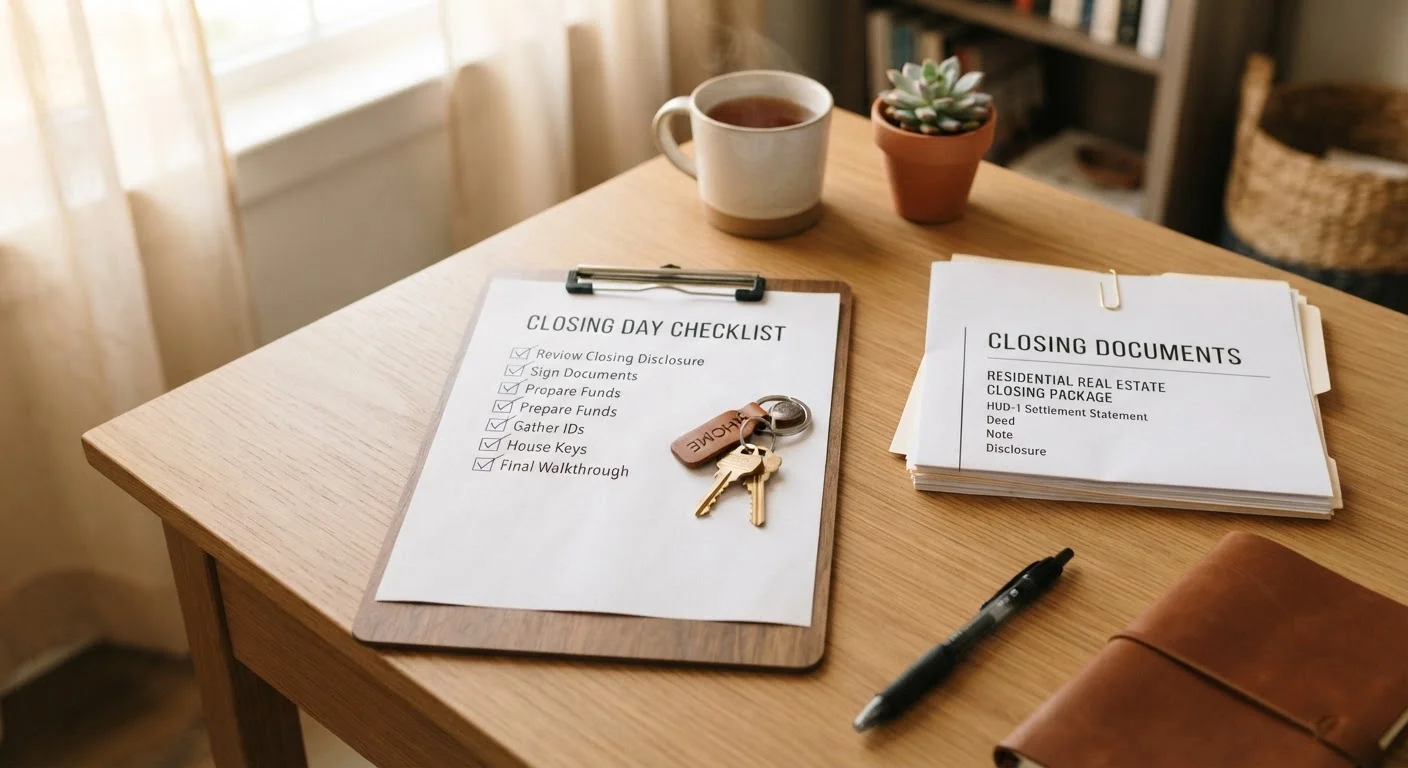
Use the checklist below as a working document in the 5-7 days leading up to your scheduled settlement. Some items - like confirming your clear-to-close status - should be verified as early as possible. Others, like the final walk-through, are intentionally scheduled close to closing day to capture the most current snapshot of the property.
The tools you'll need to work through this checklist are straightforward, but each serves a specific purpose.
Closing Disclosure
The federally required document itemizing all final loan terms, fees, and cash-to-close amounts - compare it against your Loan Estimate before signing.
Loan Estimate
Your original loan cost summary issued by the lender; use it as a benchmark when reviewing the Closing Disclosure for discrepancies.
Government-Issued Photo ID
Required at the closing table to verify your identity before signing legal documents.
Certified or Cashier's Check
A bank-guaranteed form of payment for your cash-to-close amount if you are not wiring funds electronically.
Homeowners Insurance Binder
Proof that your property insurance policy is active - most lenders require this before releasing funds.
Title Commitment Letter
Confirms the title company's intent to issue title insurance and documents any conditions that must be cleared before closing.
Once you have your documents assembled, move systematically through each group below. If you're uncertain about any item, your real estate agent, closing attorney, or settlement officer can provide clarification. This checklist covers the buyer's side of the transaction; if you're also navigating a sale, the selling property hub covers the obligations on that side.
Financing Confirmation
Documentation & Identity
Title & Legal Verification
Property Condition - Final Walk-Through
Utility & Logistics Coordination
After the Closing Table: Your Immediate Next Steps
Once documents are signed and funds are disbursed, the deed will be recorded with the county - typically the same day or the next business day. You are not the legal owner until recordation is complete, so confirm with your title company when that step is expected to occur.
Keep a complete copy of your closing package, including the deed, the Closing Disclosure, and your title insurance policies. Store these in a secure, accessible location - you will reference them for tax purposes, future refinancing, and any ownership disputes. Change the locks on your new home promptly, even if the seller handed over all known keys. You have no way of knowing how many copies exist.
Finally, note that the preparation habits you build for a major real estate transaction apply broadly to other large financial decisions. The discipline of reviewing documentation carefully before committing - as outlined in a pre-purchase evaluation checklist - is a transferable skill worth keeping.
Never Skip the Final Walk-Through
The final walk-through is your last opportunity to confirm the property's condition before you legally own it. Skipping it means accepting the home as-is at that moment. If you discover damage, missing fixtures, or incomplete repairs after closing, your legal options become significantly more limited and expensive to pursue. Always schedule the walk-through within 24 hours of settlement.
This article is for general informational purposes only and does not constitute legal, financial, or real estate advice. Consult a licensed real estate attorney, financial adviser, or settlement professional for guidance specific to your transaction and jurisdiction.